Ch. 16 The Endocrine System
Marieb - Human Anatomy & Physiology 7th Edition
Marieb, Hoehn7th EditionHuman Anatomy & PhysiologyISBN: 9780805359091Non è quello che usi tu?Cambia libro di testo
Capitolo 15, Problema 6

A hypodermic injection of epinephrine would:
a. Increase heart rate, increase blood pressure, dilate the bronchioles of the lungs, and increase digestive activity
b. Decrease heart rate, decrease blood pressure, constrict the bronchioles, and increase digestive activity
c. Decrease heart rate, increase blood pressure, constrict the bronchioles, and decrease digestive activity
d. Increase heart rate, increase blood pressure, dilate the bronchioles, and decrease digestive activity

Guida verificata passo dopo passo
1
Step 1: Understand the role of epinephrine in the body. Epinephrine, also known as adrenaline, is a hormone released by the adrenal medulla during the 'fight or flight' response, which prepares the body for rapid action.
Step 2: Identify the effects of epinephrine on the cardiovascular system. Epinephrine typically increases heart rate and blood pressure by stimulating the heart and causing vasoconstriction in some blood vessels.
Step 3: Consider the effects on the respiratory system. Epinephrine causes dilation of the bronchioles in the lungs to allow more air intake, improving oxygen delivery during stress or emergency situations.
Step 4: Analyze the impact on the digestive system. During the fight or flight response, epinephrine decreases digestive activity because the body prioritizes blood flow to muscles and vital organs rather than digestion.
Step 5: Combine these effects to select the correct answer. Look for the option that includes increased heart rate, increased blood pressure, bronchiole dilation, and decreased digestive activity.

Risposta video verificata per un problema simile:

Questa soluzione video è stata consigliata dai nostri tutor come utile per risolvere questo problema.
Durata del video:
2m

Concetti chiave

Ecco i concetti essenziali che devi comprendere per rispondere correttamente alla domanda.

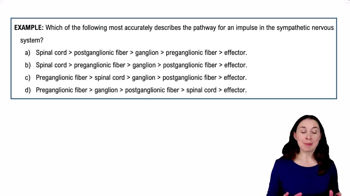
Epinephrine and the Sympathetic Nervous System

Epinephrine, also known as adrenaline, is a hormone and neurotransmitter that activates the sympathetic nervous system. It prepares the body for 'fight or flight' responses by increasing heart rate, blood pressure, and dilating airways to improve oxygen intake.
Video consigliato:
1:21
Sympathetic Nervous System Example 3

Physiological Effects of Epinephrine on the Cardiovascular and Respiratory Systems

Epinephrine increases heart rate and blood pressure by stimulating beta-1 adrenergic receptors in the heart and alpha receptors in blood vessels. It also dilates bronchioles via beta-2 adrenergic receptors, enhancing airflow to the lungs during stress or emergency situations.
Video consigliato:
Percorso guidato
1:32
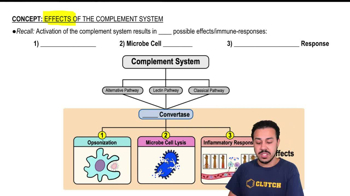
Effects of the Complement System

Epinephrine's Impact on Digestive Activity

During sympathetic activation, epinephrine decreases digestive activity by reducing blood flow to the gastrointestinal tract and inhibiting smooth muscle contractions. This conserves energy and redirects resources to vital organs needed for immediate physical activity.
Video consigliato:
Percorso guidato
02:37
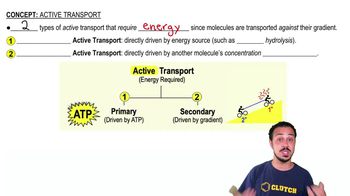
Active Transport
Pratica correlata
Domanda del libro di testo

If there is adequate carbohydrate intake, secretion of insulin results in:

a. Lower blood glucose levels

b. Increased cell utilization of glucose

c. Storage of glycogen

d. All of these

819
views
Domanda del libro di testo

A hormone not involved in glucose metabolism is:

a. Glucagon

b. Cortisone

c. Aldosterone

d. Insulin

922
views
Domanda del libro di testo

If anterior pituitary secretion is deficient in a growing child, the child will

a. Develop acromegaly

b. Become a dwarf but have fairly normal body proportions

c. Mature sexually at an earlier than normal age

d. Be in constant danger of becoming dehydrated

1078
views
Domanda del libro di testo

Parathyroid hormone:

a. Increases bone formation and lowers blood calcium levels

b. Increases calcium excretion from the body

c. Decreases calcium absorption from the gut

d. Demineralizes bone and raises blood calcium levels

1032
views
Domanda del libro di testo

Testosterone is to the male as which hormone is to the female?

a. Luteinizing hormone

b. Progesterone

c. Estrogen

d. Prolactin

1145
views
Domanda del libro di testo

Choose from the following key to identify the hormones described.

Key:

a. Aldosterone

b. Antidiuretic hormone

c. Growth hormone

d. Luteinizing hormone

e. oxytocin f. prolactin

g. T₄ and T₃

h. TSH ______ 

(1) Important anabolic hormone; many of its effects mediated by IGFs ______ 

(2) Cause the kidneys to conserve water and/or salt (two choices) ______ 

(3) Stimulates milk production ______ 

(4) Tropic hormone that stimulates the gonads to secrete sex hormones ______ 

(5) Increases uterine contractions during birth ______ 

(6) Major metabolic hormone(s) of the body ______ 

(7) Causes reabsorption of sodium ions by the kidneys ______ 

(8) Tropic hormone that stimulates the thyroid gland to secrete thyroid hormone ______ 

(9) Secreted by the posterior pituitary (two choices) ______

(10) The only steroid hormone in the list

885
views