Ch. 19 The Cardiovascular System: Blood Vessels
Marieb - Human Anatomy & Physiology 7th Edition
Marieb, Hoehn7th EditionHuman Anatomy & PhysiologyISBN: 9780805359091Non è quello che usi tu?Cambia libro di testo
Capitolo 18, Problema 24

A 60-year-old man is unable to walk more than 100 yards without experiencing severe pain in his left leg; the pain is relieved by resting for 5–10 minutes. He is told that the arteries of his leg are becoming occluded with fatty material and is advised to have the sympathetic nerves serving that body region severed. Explain how such surgery might help to relieve this man's problem.

Guida verificata passo dopo passo
1
Understand the patient's condition: The man is experiencing intermittent claudication, which is pain caused by insufficient blood flow to the leg muscles during walking due to arterial occlusion by fatty deposits (atherosclerosis).
Recognize the role of the sympathetic nervous system: Sympathetic nerves regulate vasoconstriction, which narrows blood vessels and reduces blood flow. In this case, sympathetic stimulation may worsen the reduced blood supply by causing further vasoconstriction in the already narrowed arteries.
Explain the effect of severing sympathetic nerves: Cutting these nerves (sympathectomy) reduces sympathetic-induced vasoconstriction, leading to vasodilation (widening of blood vessels). This can improve blood flow to the affected leg muscles despite the arterial occlusion.
Connect improved blood flow to symptom relief: Increased blood flow helps deliver more oxygen and nutrients to the leg muscles during activity, reducing ischemic pain and allowing the patient to walk longer distances without severe pain.
Summarize the therapeutic goal: The surgery aims to alleviate symptoms by enhancing blood supply through vasodilation, compensating partially for the arterial blockage and improving the patient's quality of life.

Risposta video verificata per un problema simile:

Questa soluzione video è stata consigliata dai nostri tutor come utile per risolvere questo problema.
Durata del video:
3m

Concetti chiave

Ecco i concetti essenziali che devi comprendere per rispondere correttamente alla domanda.

Peripheral Arterial Disease and Claudication

Peripheral arterial disease (PAD) involves narrowing or blockage of leg arteries due to fatty deposits, reducing blood flow. Claudication is the pain caused by muscle ischemia during walking, relieved by rest. Understanding this condition explains the patient's symptoms of leg pain after walking short distances.
Video consigliato:
Percorso guidato
14:43
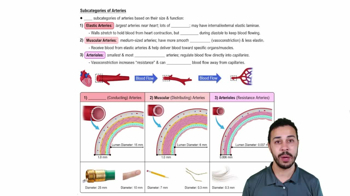
Subcategories of Arteries

Role of Sympathetic Nervous System in Vascular Tone

The sympathetic nervous system controls blood vessel constriction by releasing neurotransmitters that cause vasoconstriction. In PAD, excessive sympathetic activity can worsen ischemia by further narrowing arteries. Severing sympathetic nerves reduces vasoconstriction, promoting vasodilation and improving blood flow.
Video consigliato:
1:21
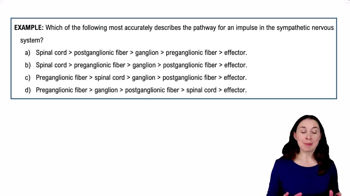
Sympathetic Nervous System Example 3

Sympathectomy as a Therapeutic Intervention

Sympathectomy involves cutting sympathetic nerves to decrease vasoconstriction and increase blood supply to affected limbs. This can relieve ischemic pain by improving oxygen delivery to muscles. Although it does not remove arterial blockages, it helps manage symptoms in patients with PAD.
Video consigliato:
4:31
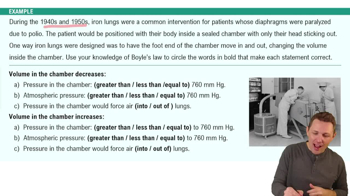
Ventilation Example 1
Pratica correlata
Domanda del libro di testo

Explain the reasons for the observed changes in blood flow velocity in the different regions of the circulation.

1032
views
Domanda del libro di testo

The Agawam High School band is playing some lively marches while the coaches are giving pep talks to their respective football squads. Although it is September, it is unseasonably hot (88°F/31°C) and the band uniforms are wool. Suddenly Ryan, the tuba player, becomes light-headed and faints. Explain his fainting in terms of vascular events.

966
views
Domanda del libro di testo

When we are cold or the external temperature is low, most venous blood returning from the distal part of the arm travels in the deep veins where it picks up heat (by countercurrent exchange) from the nearby brachial artery en route. However, when we are hot, and especially during exercise, venous return from the distal arm travels in the superficial veins and those veins tend to bulge superficially in a person who is working out. Explain why venous return takes a different route in the second situation.

974
views
Domanda del libro di testo

How does the control of blood flow to the skin for the purpose of regulating body temperature differ from the control of nutrient blood flow to skin cells?

869
views
1
rank
Domanda del libro di testo

Your friend Jillian, who knows little about science, is reading a magazine article about a patient who had an 'aneurysm at the base of his brain that suddenly grew much larger.' The surgeons' first goal was to 'keep it from rupturing,' and the second goal was to 'relieve the pressure on the brain stem and cranial nerves.' The surgeons were able to 'replace the aneurysm with a section of plastic tubing,' so the patient recovered. Jillian asks you what all this means. Explain.

883
views
Domanda del libro di testo

Describe neural and chemical (both systemic and local) effects exerted on the blood vessels when you are fleeing from a mugger. (Be careful, this is more involved than it appears at first glance.)

1094
views