Ch. 20 The Lymphatic System and Lymphoid Organs and Tissues
Marieb - Human Anatomy & Physiology 7th Edition
Marieb, Hoehn7th EditionHuman Anatomy & PhysiologyISBN: 9780805359091Non è quello che usi tu?Cambia libro di testo
Capitolo 19, Problema 10

Compare and contrast blood, interstitial fluid, and lymph.

Guida verificata passo dopo passo
1
Step 1: Define each fluid clearly. Blood is a connective tissue composed of plasma and cells, circulating within blood vessels. Interstitial fluid is the fluid that surrounds tissue cells, found in the spaces between cells. Lymph is a fluid derived from interstitial fluid that enters lymphatic vessels.
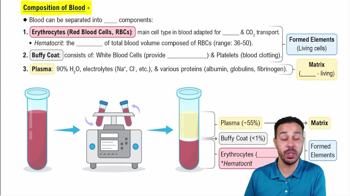
Step 2: Describe the composition of each fluid. Blood contains plasma (water, proteins, nutrients, hormones, waste products) and formed elements (red blood cells, white blood cells, platelets). Interstitial fluid is similar to plasma but lacks most plasma proteins. Lymph is essentially interstitial fluid that has entered lymphatic vessels and may contain lymphocytes and some proteins.
Step 3: Explain the location and movement. Blood circulates within the cardiovascular system, interstitial fluid bathes cells in tissues, and lymph flows through lymphatic vessels back toward the bloodstream.
Step 4: Discuss the functions. Blood transports gases, nutrients, wastes, and immune cells. Interstitial fluid facilitates exchange of substances between blood and cells. Lymph helps return excess interstitial fluid to the blood, filters pathogens, and supports immune responses.
Step 5: Summarize the differences and similarities. All three fluids are involved in transport and maintaining homeostasis, but differ in composition, location, and specific roles within the body’s circulatory and immune systems.

Risposta video verificata per un problema simile:

Questa soluzione video è stata consigliata dai nostri tutor come utile per risolvere questo problema.
Durata del video:
2m

Concetti chiave

Ecco i concetti essenziali che devi comprendere per rispondere correttamente alla domanda.

Blood Composition and Function

Blood is a connective tissue composed of plasma, red and white blood cells, and platelets. It transports oxygen, nutrients, hormones, and waste products throughout the body, playing a vital role in immune defense and clotting.
Video consigliato:
Percorso guidato
7:49
Composition of Blood

Interstitial Fluid Characteristics

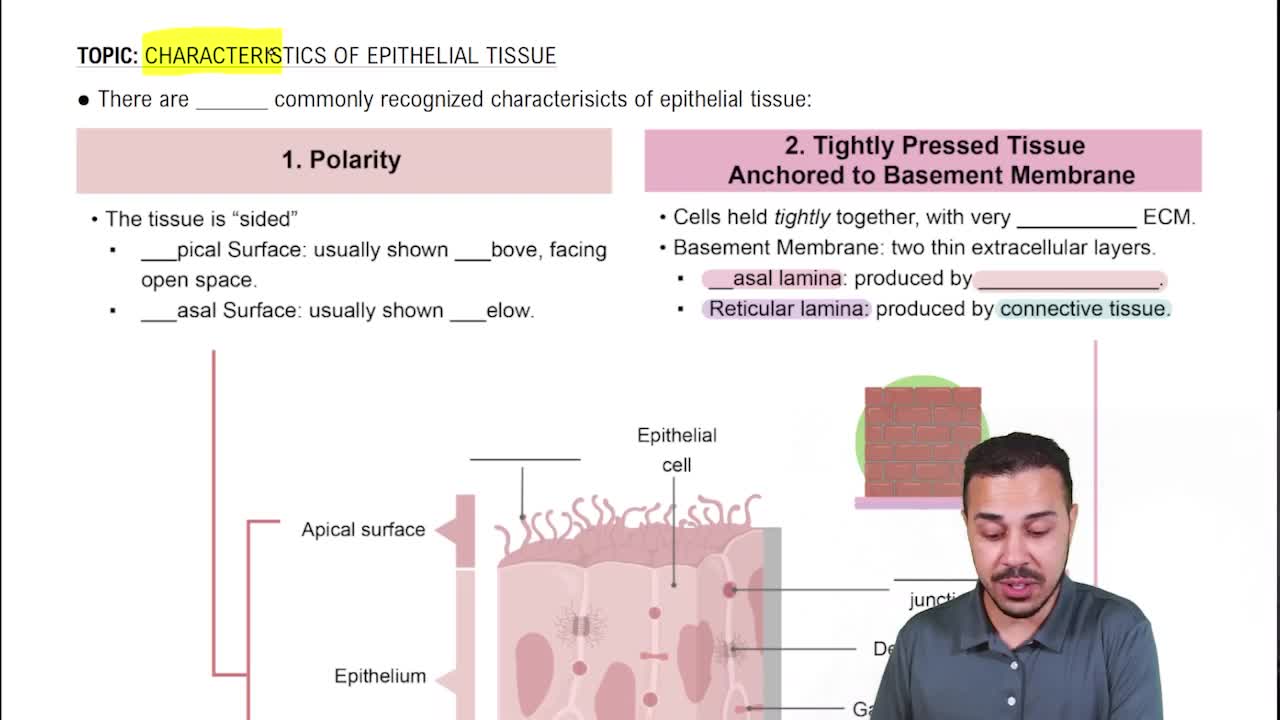
Interstitial fluid is the fluid that surrounds tissue cells, providing a medium for the exchange of nutrients, gases, and waste between blood and cells. It is derived from plasma but lacks large proteins, facilitating cellular communication and nutrient delivery.
Video consigliato:
00:48
5 Characteristics of Epithelia

Lymph and Its Role in the Lymphatic System

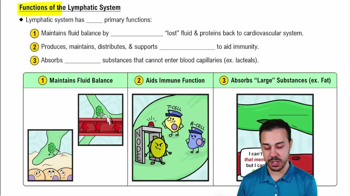
Lymph is a clear fluid formed from interstitial fluid that enters lymphatic vessels. It transports immune cells and removes excess fluid, waste, and pathogens from tissues, contributing to immune surveillance and fluid balance.
Video consigliato:
Percorso guidato
3:57
Functions of the Lymphatic System