Ch. 21 The Immune System: Innate and Adaptive Body Defenses
Marieb - Human Anatomy & Physiology 7th Edition
Marieb, Hoehn7th EditionHuman Anatomy & PhysiologyISBN: 9780805359091Non è quello che usi tu?Cambia libro di testo
Capitolo 20, Problema 16

Define immunocompetence and self-tolerance. How is self-tolerance achieved?

Guida verificata passo dopo passo
1
Define immunocompetence as the ability of immune cells, particularly lymphocytes, to recognize and respond specifically to antigens. It means these cells can identify foreign substances and mount an immune response.
Define self-tolerance as the immune system's ability to recognize the body's own cells and molecules as 'self' and not attack them, preventing autoimmune reactions.
Explain that self-tolerance is primarily achieved through processes during lymphocyte development, where cells that strongly react to self-antigens are eliminated or inactivated.
Describe central tolerance, which occurs in primary lymphoid organs (thymus for T cells, bone marrow for B cells), where self-reactive lymphocytes undergo apoptosis or receptor editing.
Mention peripheral tolerance mechanisms that control any self-reactive lymphocytes that escape central tolerance, including anergy (functional inactivation), suppression by regulatory T cells, and deletion.

Risposta video verificata per un problema simile:

Questa soluzione video è stata consigliata dai nostri tutor come utile per risolvere questo problema.
Durata del video:
2m

Concetti chiave

Ecco i concetti essenziali che devi comprendere per rispondere correttamente alla domanda.

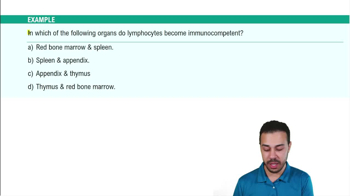
Immunocompetence

Immunocompetence refers to the ability of the immune system, particularly lymphocytes, to recognize and respond effectively to specific antigens. It ensures that immune cells can identify pathogens and mount an appropriate defense, which is essential for protecting the body against infections.
Video consigliato:
Percorso guidato
1:20
Overview of Lymphoid Organs Example 1

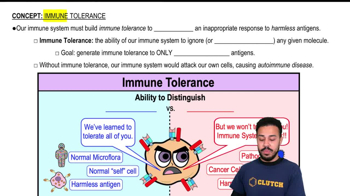
Self-tolerance

Self-tolerance is the immune system's capacity to avoid attacking the body's own cells and tissues. It prevents autoimmune reactions by ensuring that immune cells do not recognize self-antigens as threats, maintaining immune homeostasis and preventing damage to healthy tissues.
Video consigliato:
Percorso guidato
3:19
Immune Tolerance

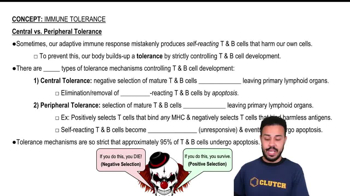
Mechanisms of Achieving Self-tolerance

Self-tolerance is achieved through central and peripheral mechanisms. Central tolerance occurs during lymphocyte development in the thymus and bone marrow, where self-reactive cells are eliminated or inactivated. Peripheral tolerance involves regulatory T cells and anergy to control any self-reactive cells that escape central tolerance.
Video consigliato:
Percorso guidato
11:54
Central vs. Peripheral Tolerance