Ch. 21 The Immune System: Innate and Adaptive Body Defenses
Marieb - Human Anatomy & Physiology 7th Edition
Marieb, Hoehn7th EditionHuman Anatomy & PhysiologyISBN: 9780805359091Non è quello che usi tu?Cambia libro di testo
Capitolo 20, Problema 11

The cell type most often invaded by HIV is a(n)
a. Eosinophil
b. Cytotoxic T cell
c. Natural killer cell
d. Helper T cell
e. B cell.

Guida verificata passo dopo passo
1
Understand the nature of HIV (Human Immunodeficiency Virus): HIV is a virus that targets the immune system, specifically cells that play a role in coordinating immune responses.
Recall the primary function of each cell type listed in the options: a. Eosinophils are involved in allergic reactions and parasitic infections, b. Cytotoxic T cells destroy infected or cancerous cells, c. Natural killer cells are part of the innate immune system and target infected or abnormal cells, d. Helper T cells coordinate immune responses by activating other immune cells, e. B cells produce antibodies.
Identify the specific cell type that HIV targets: HIV binds to the CD4 receptor, which is found on certain immune cells. Helper T cells (also called CD4+ T cells) are the primary cells that express this receptor.
Understand the consequences of HIV targeting Helper T cells: By infecting and destroying these cells, HIV weakens the immune system, making the body more susceptible to infections and diseases.
Conclude that the correct answer is the cell type with the CD4 receptor, which is the Helper T cell (option d).

Risposta video verificata per un problema simile:

Questa soluzione video è stata consigliata dai nostri tutor come utile per risolvere questo problema.
Durata del video:
3m

Concetti chiave

Ecco i concetti essenziali che devi comprendere per rispondere correttamente alla domanda.

HIV and its Target Cells

HIV (Human Immunodeficiency Virus) primarily targets the immune system, specifically the CD4+ T cells, commonly known as Helper T cells. These cells play a crucial role in orchestrating the immune response by activating other immune cells. The virus binds to the CD4 receptor and co-receptors on these cells, leading to their infection and eventual depletion, which compromises the immune system.
Video consigliato:
2:50
Receptors at Target Organs

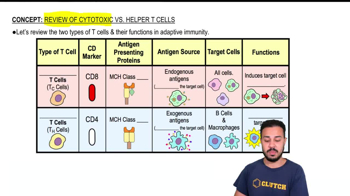
Helper T Cells

Helper T cells are a subset of T lymphocytes that are essential for the adaptive immune response. They assist in activating B cells to produce antibodies and stimulate cytotoxic T cells to kill infected cells. The loss of Helper T cells due to HIV infection leads to a weakened immune system, making the body more susceptible to opportunistic infections and diseases.
Video consigliato:
Percorso guidato
4:27
Review of Cytotoxic vs Helper T Cells

Immune System Response

The immune system response involves various cells and mechanisms that work together to defend the body against pathogens. This includes the innate immune response, which provides immediate defense, and the adaptive immune response, which is more specific and involves memory cells. Understanding how HIV disrupts this response, particularly by targeting Helper T cells, is crucial for comprehending the implications of HIV infection and the progression to AIDS.
Video consigliato:
Percorso guidato
6:59
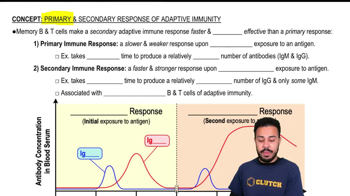
Primary and Secondary Response of Adaptive Immunity