Ch. 26 Fluid, Electrolyte, and Acid-Base Balance
Marieb - Human Anatomy & Physiology 7th Edition
Marieb, Hoehn7th EditionHuman Anatomy & PhysiologyISBN: 9780805359091Non è quello che usi tu?Cambia libro di testo
Capitolo 25, Problema 14

Describe the thirst mechanism, indicating how it is triggered and terminated.

Guida verificata passo dopo passo
1
Step 1: Understand that the thirst mechanism is a physiological process that helps maintain body fluid balance by prompting the sensation of thirst, which motivates fluid intake.
Step 2: Identify the primary triggers of thirst, which include increased plasma osmolality (concentration of solutes in the blood) and decreased blood volume or blood pressure. These changes are detected by osmoreceptors in the hypothalamus and baroreceptors in blood vessels, respectively.
Step 3: Explain that when plasma osmolality rises, osmoreceptors in the hypothalamus shrink due to water loss from their cells, stimulating the thirst center in the hypothalamus to create the sensation of thirst.
Step 4: Describe how decreased blood volume or pressure is sensed by baroreceptors in the cardiovascular system, which send signals to the hypothalamus to also stimulate thirst and promote fluid intake.
Step 5: Clarify that the thirst mechanism is terminated when fluid intake restores plasma osmolality and blood volume to normal levels, which is detected by the osmoreceptors and baroreceptors, leading to inhibition of the thirst center and cessation of the thirst sensation.

Risposta video verificata per un problema simile:

Questa soluzione video è stata consigliata dai nostri tutor come utile per risolvere questo problema.
Durata del video:
3m

Concetti chiave

Ecco i concetti essenziali che devi comprendere per rispondere correttamente alla domanda.

Thirst Mechanism

The thirst mechanism is a physiological process that regulates fluid intake to maintain body water balance. It is primarily controlled by the brain, which detects changes in hydration status and triggers the sensation of thirst to encourage drinking.
Video consigliato:
3:02
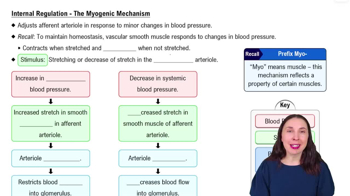
Internal Regulation - The Myogenic Mechanism

Osmoreceptors and Osmoregulation

Osmoreceptors are specialized neurons in the hypothalamus that detect changes in blood osmolarity. When blood becomes too concentrated due to dehydration, these receptors stimulate thirst and the release of antidiuretic hormone (ADH) to conserve water.
Video consigliato:
Percorso guidato
07:16
Osmoregulation and Nitrogenous Waste

Termination of Thirst

Thirst is terminated when fluid intake restores normal blood volume and osmolarity. Signals from the mouth, throat, and stomach, along with normalized blood chemistry, inform the brain to stop the sensation of thirst, preventing overhydration.
Video consigliato:
Percorso guidato
02:44
3) Termination of Transcription