Domanda del libro di testo
Identify the major veins in the following diagram.
a. ___
b. ___
c. ___
d. ___
e. ___
f. ___
g. ___
h. ___
i. ___
213
views

 Martini, Nath, Bartholomew 12th EditionCh. 21 Blood Vessels and CirculationProblema 8
 Guida verificata passo dopo passo
 4:53
4:53
 03:40
03:40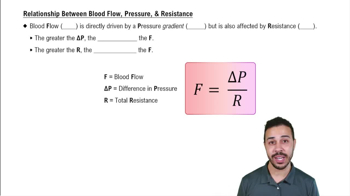 6:40
6:40Identify the major veins in the following diagram.
a. ___
b. ___
c. ___
d. ___
e. ___
f. ___
g. ___
h. ___
i. ___
Net hydrostatic pressure forces water ____ a capillary; net osmotic pressure reabsorbs water _____ a capillary.
(a) into, out of
(b) out of, into
(c) out of, out of
(d) into, into
Baroreceptors that function in the regulation of blood pressure are located in the:
(a) Left ventricle
(b) Brainstem
(c) Carotid sinus
(d) Common iliac artery
(e) Pulmonary trunk
The local control of blood flow due to the action of precapillary sphincters is:
(a) Vasomotion
(b) Autoregulation
(c) Selective resistance
(d) Turbulence
Large molecules such as peptides and proteins move into and out of the bloodstream by way of:
(a) Continuous capillaries
(b) Fenestrated capillaries
(c) Thoroughfare channels
(d) Venules
The most important factor in vascular resistance is:
(a) The viscosity of the blood
(b) The diameter of the lumen of blood vessels
(c) Turbulence due to irregular surfaces of blood vessels
(d) The length of the blood vessels