Domanda del libro di testo
Which of the following is greater?
(a) The osmotic pressure of the interstitial fluid during inflammation
(b) The osmotic pressure of the interstitial fluid during normal conditions
(c) Neither is greater
986
views

 Martini, Nath, Bartholomew 12th EditionCh. 21 Blood Vessels and CirculationProblema 18
 Guida verificata passo dopo passo
 7:11
7:11
 6:52
6:52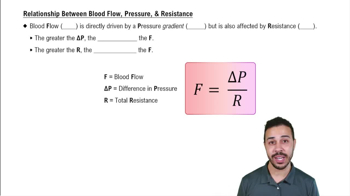 6:40
6:40Which of the following is greater?
(a) The osmotic pressure of the interstitial fluid during inflammation
(b) The osmotic pressure of the interstitial fluid during normal conditions
(c) Neither is greater
The paired arteries supplying blood to the body wall and other structures outside the abdominopelvic cavity include the:
a) Left gastric, hepatic, splenic, and phrenic arteries
(b) Adrenal, colic, lumbar, and gonadal arteries
(c) Iliac, femoral, and lumbar arteries
(d) Celiac, left gastric, and superior and inferior mesenteric arteries
Which of the following conditions would have the greatest effect on peripheral resistance?
(a) Doubling the length of a vessel
(b) Doubling the diameter of a vessel
(c) Doubling the viscosity of the blood
(d) Doubling the turbulence of the blood
(e) Doubling the number of white cells in the blood
The vein that drains the dural sinuses of the brain is the
(a) Cephalic vein
(b) Great saphenous vein
(c) Internal jugular vein
(d) Superior vena cava
Why do capillaries permit the diffusion of materials, whereas arteries and veins do not?
What are the primary forces that cause fluid to move?
(a) Out of a capillary at its arterial end and into the interstitial fluid
(b) Into a capillary at its venous end from the interstitial fluid?