Ch. 24 The Digestive System
Martini - Fundamentals of Anatomy & Physiology 12th Edition
Martini, Nath, Bartholomew12th EditionFundamentals of Anatomy & PhysiologyISBN: 9780137854011Non è quello che usi tu?Cambia libro di testo
Capitolo 24, Problema 2

The outer layer of the digestive tract is known as the
(a) Serosa
(b) Mucosa
(c) Submucosa
(d) Muscularis

Guida verificata passo dopo passo
1
Understand the structure of the digestive tract wall, which is composed of several layers from the innermost to the outermost: mucosa, submucosa, muscularis, and serosa (or adventitia in some regions).
Recall that the mucosa is the innermost layer lining the lumen, responsible for secretion and absorption.
Recognize that the submucosa lies just outside the mucosa and contains blood vessels, nerves, and connective tissue.
Identify the muscularis layer, which is made up of smooth muscle responsible for peristalsis and segmentation movements.
Conclude that the outermost layer of the digestive tract is the serosa, a thin layer of connective tissue covered by a layer of simple squamous epithelium, which reduces friction between the digestive organs and surrounding structures.

Risposta video verificata per un problema simile:

Questa soluzione video è stata consigliata dai nostri tutor come utile per risolvere questo problema.

Concetti chiave

Ecco i concetti essenziali che devi comprendere per rispondere correttamente alla domanda.

Layers of the Digestive Tract

The digestive tract is composed of several layers, each with distinct functions. From the innermost to the outermost, these include the mucosa, submucosa, muscularis, and serosa. Understanding these layers helps identify their roles in digestion and protection.
Video consigliato:
Percorso guidato
02:31
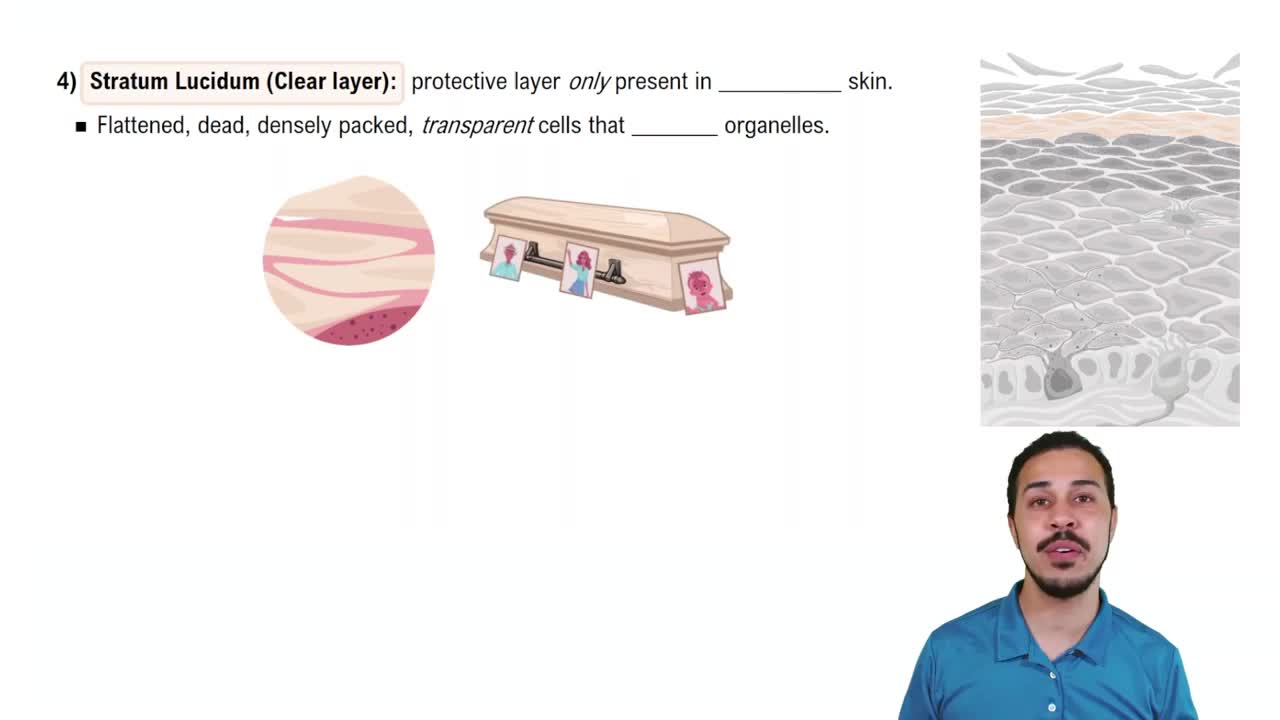
Epidermal Layers: Stratum Lucidum (Clear Layer)

Serosa

The serosa is the outermost layer of the digestive tract, consisting of a thin layer of connective tissue covered by a layer of simple squamous epithelium. It serves as a protective outer covering and reduces friction between the digestive organs and surrounding structures.
Video consigliato:
1:14
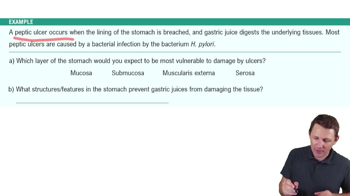
The Stomach Example 2

Functions of Mucosa, Submucosa, and Muscularis

The mucosa is the innermost layer involved in secretion and absorption; the submucosa contains blood vessels and nerves supporting the mucosa; the muscularis is responsible for peristalsis and mechanical digestion through muscle contractions. Differentiating these layers clarifies their specific roles.
Video consigliato:
6:29
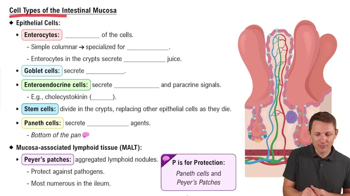
Cell Types of the Intestinal Mucosa