 Indietro
General Biology I Chapter 9 Genetics Study Guide
 02:09
02:09
Termini in questo insieme (29)
True-breeding organisms are homozygous for a trait and produce offspring identical to themselves when self-crossed.
A hybrid is the offspring of two different true-breeding varieties, typically heterozygous for a trait.
The P generation is the parental generation in a genetic cross, usually true-breeding individuals.
The F1 generation is the first filial generation, offspring of the P generation cross, often hybrids.
The F2 generation is the offspring of the F1 generation self-cross or intercross.
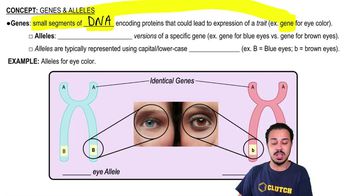
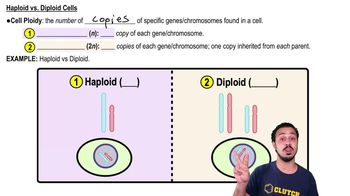
Homozygous means having two identical alleles for a gene; heterozygous means having two different alleles.
A dominant allele masks the effect of a recessive allele in heterozygotes.
Genotype is the genetic makeup of an organism; phenotype is the observable traits.
A monohybrid cross examines the inheritance of a single trait between two heterozygous parents.
A Punnett square is a diagram used to predict genotype and phenotype ratios of offspring from a genetic cross.
Law of segregation states that allele pairs separate during gamete formation, so each gamete carries only one allele.
Homologous chromosomes are chromosome pairs, one from each parent, that carry genes for the same traits.
Law of independent assortment states that alleles of different genes assort independently during gamete formation.
Pedigrees track inheritance of traits through generations to determine dominant or recessive patterns.
Dominant disorders require one allele; recessive disorders require two copies of the allele to be expressed.
Incomplete dominance occurs when heterozygotes show an intermediate phenotype between two homozygotes.
Multiple alleles means more than two allele forms exist for a gene in a population, e.g., ABO blood groups.
Codominance occurs when both alleles are fully expressed in heterozygotes.
Pleiotropy is when one gene influences multiple, seemingly unrelated phenotypic traits.
Polygenic inheritance involves multiple genes contributing to a single trait, producing continuous variation.
The chromosome theory of inheritance states that genes are located on chromosomes, which segregate and assort independently.
Segregation corresponds to separation of homologous chromosomes; independent assortment corresponds to random alignment of chromosome pairs.
Human sex is determined by X and Y chromosomes; the SRY gene on the Y chromosome triggers male development.
Sex-linked genes are located on sex chromosomes; disorders like color blindness are often X-linked recessive.
Use Punnett squares to predict genotype and phenotype ratios for crosses involving one or two traits.
ABO blood groups are determined by multiple alleles with codominance between A and B alleles.
A carrier is a heterozygous individual who carries a recessive allele but does not show the trait.
A testcross is a cross between an individual with unknown genotype and a homozygous recessive to determine the unknown genotype.
Linked genes are close on the same chromosome; recombination frequency measures how often crossing over separates them.