 Indietro
Transport of Substances Across Membranes
Guida di studio - Note intelligenti
 Appunti personalizzati basati sui tuoi materiali, ampliati con definizioni chiave, esempi e contesto.
Transport of Substances Across Membranes
Membrane Structure and Properties
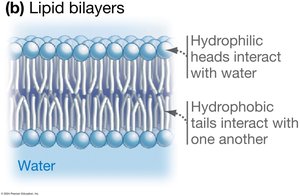
Biological membranes are primarily composed of a lipid bilayer, which forms the fundamental barrier between the cell and its environment. The arrangement of lipids and proteins within the membrane determines its selective permeability and fluidity.
Lipid Bilayer: Consists of two layers of phospholipids with hydrophilic (water-attracting) heads facing outward and hydrophobic (water-repelling) tails facing inward.
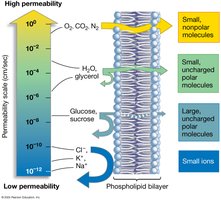
Selective Permeability: Membranes allow certain small, uncharged molecules to pass freely, while ions and large molecules require assistance from membrane proteins.
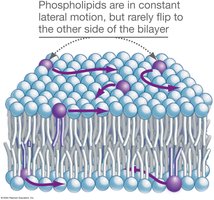
Fluidity: Phospholipids move laterally within the membrane, and increased temperature enhances this fluidity, affecting permeability.
Diffusion Across Membranes
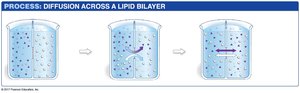
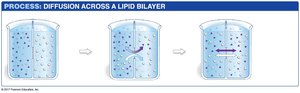
Diffusion is the spontaneous movement of molecules from regions of high concentration to regions of low concentration. It is a passive process that does not require energy input and is fundamental to the movement of substances across cell membranes.
Concentration Gradient: The difference in solute concentration across a space drives net movement.
Equilibrium: Diffusion continues until solute molecules are evenly distributed, though individual molecules continue to move randomly.
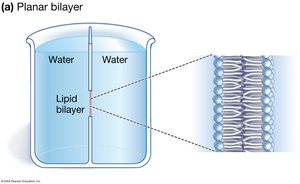
Rate of Diffusion: Described by the equation: where F = rate of diffusion, k = diffusion constant, A = surface area, = concentration difference, d = distance (e.g., membrane thickness).
Diffusion with Charged Particles
Charged particles (ions) rarely cross the phospholipid bilayer unaided. Their movement is influenced by both concentration gradients and electrical gradients, together forming the electrochemical gradient.
Electrochemical Gradient: The combined effect of concentration and electrical gradients on ion movement.
Electrochemical Equilibrium: Achieved when the forces of the concentration and electrical gradients are balanced.
Consequences of Size and Shape for Diffusion
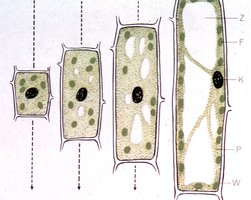
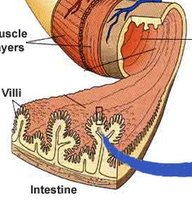
As organisms increase in size, the surface area to volume ratio decreases, which reduces the rate of diffusion per unit volume. Adaptations such as subdivision into smaller units or increased surface complexity help offset these limitations.
Surface Area to Volume Ratio: Calculated as surface area divided by volume; smaller cells have a higher ratio, facilitating efficient diffusion.
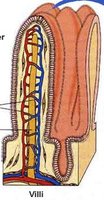
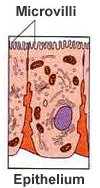
Adaptations: Vacuoles in plant cells reduce internal volume, and structures like villi in animal intestines increase surface area for absorption.
Osmosis
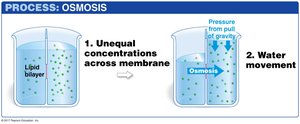
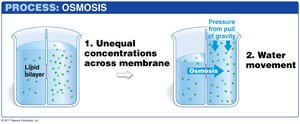
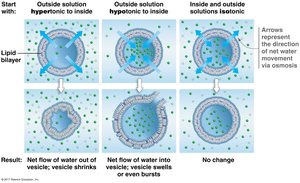
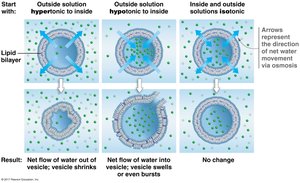
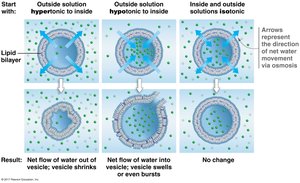
Osmosis is the diffusion of water across a semi-permeable membrane. It occurs when water moves from regions of high free water concentration (low solute concentration) to regions of low free water concentration (high solute concentration).
Semi-permeable Membrane: Allows water to pass but restricts solute movement.
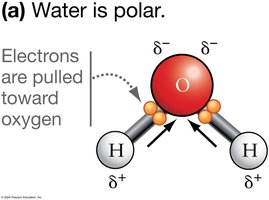
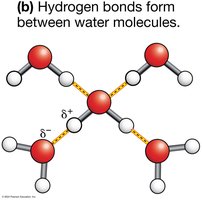
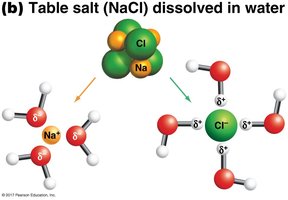
Water Polarity: Water is a polar molecule, forming hydrogen bonds with other molecules and ions.
Osmotic Effects: Causes changes in cell volume depending on the relative solute concentrations inside and outside the cell.
Passive Transport
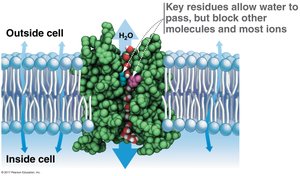
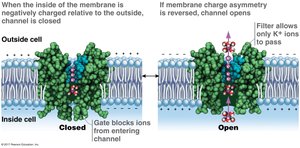
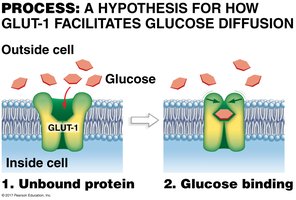
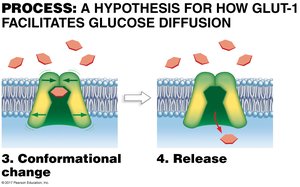
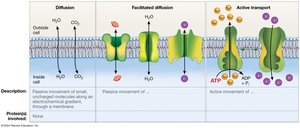
Passive transport involves the movement of substances across membranes without energy input, driven by concentration or electrochemical gradients. It includes simple diffusion, facilitated diffusion via channel proteins, and carrier proteins.
Channel Proteins: Form pores for specific ions or molecules (e.g., aquaporins for water, gated channels for ions).
Carrier Proteins: Undergo conformational changes to transport molecules across the membrane (e.g., GLUT-1 for glucose).
Active Transport
Active transport moves substances against their concentration or electrochemical gradients, requiring energy (usually from ATP). This process is essential for maintaining cellular homeostasis.
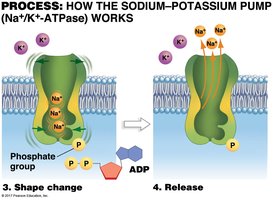
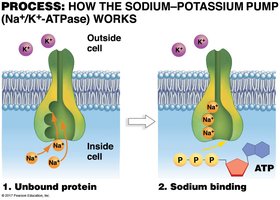
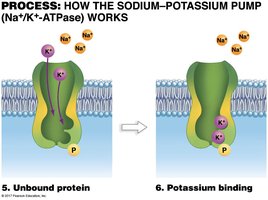
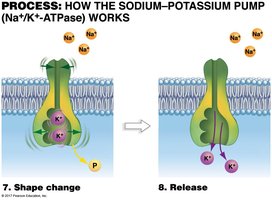
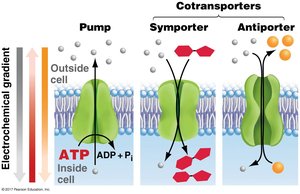
Pumps: Membrane proteins that use ATP to transport ions (e.g., sodium-potassium pump, proton pump).
Primary Active Transport: Direct use of ATP to move molecules (e.g., Na+/K+-ATPase).
Secondary Active Transport (Cotransport): Uses the energy stored in electrochemical gradients established by primary active transport to move other substances (e.g., symporters and antiporters).
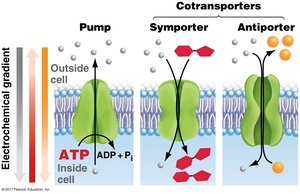
Summary Table: Types of Membrane Transport
Type | Energy Required? | Direction | Proteins Involved | Examples |
|---|---|---|---|---|
Simple Diffusion | No | Down gradient | None | O2, CO2 |
Facilitated Diffusion | No | Down gradient | Channel, Carrier | Glucose, H2O |
Primary Active Transport | Yes (ATP) | Against gradient | Pumps | Na+/K+-ATPase |
Secondary Active Transport | Indirect (gradient) | Against gradient | Symporter, Antiporter | Na+-glucose symporter |
Additional info: For further reading, see Sections 2.2 and 6.3 in your textbook for more details on water chemistry and membrane transport mechanisms.
