
Ch. 12 - The Cell Cycle
Campbell - Campbell Biology 12th Edition
Urry12th EditionCampbell BiologyISBN: 9785794169850Non è quello che usi tu?Cambia libro di testo
Capitolo 12, Problema 5

Which of the following occurs during apoptosis?
a. Lysis of the cell
b. Direct contact between signaling cells
c. Fragmentation of the DNA
d. Release of proteases outside the cell

Guida verificata passo dopo passo
1
Understand the concept of apoptosis: Apoptosis is a form of programmed cell death that occurs in multicellular organisms. It is a controlled process that leads to the elimination of cells without releasing harmful substances into the surrounding area.
Identify the key features of apoptosis: During apoptosis, several characteristic events occur, including cell shrinkage, chromatin condensation, DNA fragmentation, and the formation of apoptotic bodies.
Analyze each option: (A) Lysis of the cell is not a feature of apoptosis; it is more characteristic of necrosis, where the cell bursts and releases its contents. (B) Direct contact between signaling cells is related to cell communication, not specifically apoptosis. (C) Fragmentation of the DNA is a hallmark of apoptosis, where the DNA is cleaved into small fragments. (D) Release of proteases outside the cell is not typical of apoptosis; instead, proteases like caspases are activated within the cell to execute the apoptotic process.
Focus on the correct feature: Based on the analysis, fragmentation of the DNA is a key event that occurs during apoptosis.
Conclude with the correct choice: The correct answer is (C) fragmentation of the DNA, as it is a defining characteristic of the apoptotic process.

Risposta video verificata per un problema simile:

Questa soluzione video è stata consigliata dai nostri tutor come utile per risolvere questo problema.
Durata del video:
4m

Concetti chiave

Ecco i concetti essenziali che devi comprendere per rispondere correttamente alla domanda.

Apoptosis

Apoptosis is a programmed cell death process that is crucial for maintaining healthy tissue homeostasis. Unlike necrosis, apoptosis is a controlled and energy-dependent process that involves specific cellular changes, such as cell shrinkage, chromatin condensation, and DNA fragmentation, ultimately leading to the formation of apoptotic bodies that are phagocytosed by neighboring cells.
Video consigliato:
04:05
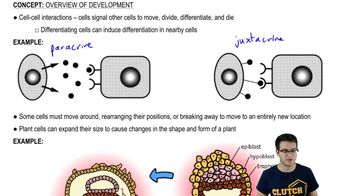
Cellular Interactions and Apoptosis

DNA Fragmentation

DNA fragmentation is a hallmark of apoptosis, where the DNA within the cell is cleaved into smaller fragments. This process is facilitated by specific enzymes called caspases, which activate endonucleases that cut the DNA at internucleosomal regions. DNA fragmentation is a key step in ensuring that the cell's genetic material is irreversibly damaged, preventing any potential for recovery or replication.
Video consigliato:
09:29
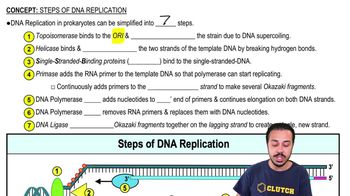
Steps of DNA Replication

Proteases in Apoptosis

Proteases, particularly caspases, play a central role in apoptosis by cleaving various cellular substrates, leading to the dismantling of the cell. These enzymes are activated in a cascade manner and are responsible for executing the apoptotic program. While proteases are active within the cell during apoptosis, their release outside the cell is not typical of apoptosis but rather of necrosis, where uncontrolled cell lysis occurs.
Video consigliato:
04:05
Cellular Interactions and Apoptosis
Pratica correlata
Domanda del libro di testo

Vinblastine is a standard chemotherapeutic drug used to treat cancer. Because it interferes with the assembly of microtubules, its effectiveness must be related to

a. Disruption of mitotic spindle formation

b. Suppression of cyclin production

c. Myosin denaturation and inhibition of cleavage furrow formation

d. Inhibition of DNA synthesis

3742
views
Domanda del libro di testo

Which of the following occurs during S phase?

a. Condensation of the chromosomes

b. Replication of the DNA

c. Separation of sister chromatids

d. Spindle formation

3450
views
Domanda del libro di testo

One difference between cancer cells and normal cells is that cancer cells

a. Are unable to synthesize DNA

b. Are arrested at the S phase of the cell cycle

c. Continue to divide even when they are tightly packed together

d. Cannot function properly because they are affected by density-dependent inhibition

2958
views
Domanda del libro di testo

In the cells of some organisms, mitosis occurs without cytokinesis. This will result in

a. Cells with more than one nucleus

b. Cells that are unusually small

c. Cells lacking nuclei

d. Cell cycles lacking an S phase

3776
views
Domanda del libro di testo

Cell A has half as much DNA as cells B, C, and D in a mitotically active tissue. Cell A is most likely in

a. G1

b. G2

c. Prophase

d. Metaphase

3833
views
Domanda del libro di testo

The decline of MPF activity at the end of mitosis is due to

a. The destruction of the protein kinase Cdk

b. Decreased synthesis of Cdk

c. The degradation of cyclin

d. The accumulation of cyclin

3449
views