
Ch. 2 - The Chemical Context of Life
Campbell - Campbell Biology 12th Edition
Urry12th EditionCampbell BiologyISBN: 9785794169850Non è quello che usi tu?Cambia libro di testo
Capitolo 2, Problema 3

The reactivity of an atom arises from
a. The average distance of the outermost electron shell from the nucleus.
b. The existence of unpaired electrons in the valence shell.
c. The sum of the potential energies of all the electron shells.
d. The potential energy of the valence shell.

Guida verificata passo dopo passo
1
Understand that an atom's reactivity is primarily determined by its valence electrons, which are the electrons in the outermost shell.
Recognize that unpaired electrons in the valence shell are key to an atom's reactivity. Atoms tend to react in order to pair these electrons, achieving a more stable electron configuration.
Consider the concept of electron shells: the valence shell is the outermost shell, and its configuration influences how an atom interacts with other atoms.
Evaluate the options given: (a) refers to the distance of the electron shell, which affects energy levels but not directly reactivity; (b) focuses on unpaired electrons, which directly influence reactivity; (c) and (d) involve potential energy, which is related but not the primary factor in reactivity.
Conclude that the existence of unpaired electrons in the valence shell (option b) is the most direct factor contributing to an atom's reactivity.

Risposta video verificata per un problema simile:

Questa soluzione video è stata consigliata dai nostri tutor come utile per risolvere questo problema.
Durata del video:
1m

Concetti chiave

Ecco i concetti essenziali che devi comprendere per rispondere correttamente alla domanda.

Valence Electrons

Valence electrons are the electrons located in the outermost shell of an atom. They play a crucial role in chemical reactivity and bonding, as atoms tend to react to achieve a full valence shell, often through sharing, gaining, or losing electrons. The presence of unpaired valence electrons can increase an atom's reactivity.
Video consigliato:
07:41
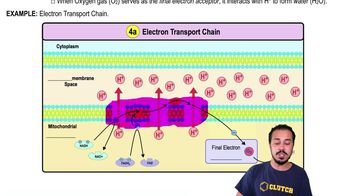
Electron Transport Chain

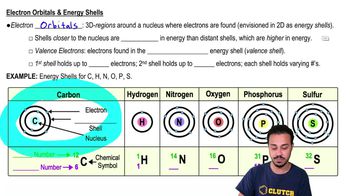
Electron Shells

Electron shells are layers around the nucleus of an atom where electrons reside. Each shell has a specific energy level, and electrons fill these shells starting from the lowest energy level. The arrangement and distance of these shells from the nucleus can influence the atom's reactivity, as electrons in outer shells are less tightly bound and more likely to participate in chemical reactions.
Video consigliato:
09:44
Electron Orbitals & Energy Shells

Potential Energy in Electron Shells

The potential energy of electrons in an atom is related to their position within electron shells. Electrons in outer shells have higher potential energy due to their distance from the nucleus. This energy influences the atom's reactivity, as electrons with higher potential energy are more likely to be involved in chemical reactions, seeking to lower their energy state through bonding.
Video consigliato:
09:44
Electron Orbitals & Energy Shells