
Ch. 37 - Soil and Plant Nutrition
Campbell - Campbell Biology 12th Edition
Urry12th EditionCampbell BiologyISBN: 9785794169850Non è quello che usi tu?Cambia libro di testo
Capitolo 37, Problema 4

Epiphytes are:
a. Fungi that attack plants
b. Fungi that form mutualistic associations with roots
c. Nonphotosynthetic parasitic plants.
d. Plants that grow on other plants.

Guida verificata passo dopo passo
1
Understand the term 'epiphytes': Epiphytes are a type of plant that grows on another plant for physical support. They are not parasitic and do not harm the host plant.
Eliminate option a: Fungi that attack plants are typically parasitic and do not fit the definition of epiphytes.
Eliminate option b: Fungi that form mutualistic associations with roots are known as mycorrhizae, not epiphytes.
Eliminate option c: Nonphotosynthetic parasitic plants are not epiphytes, as epiphytes are typically photosynthetic and not parasitic.
Identify the correct option: Plants that grow on other plants without harming them are epiphytes, which corresponds to option d.

Risposta video verificata per un problema simile:

Questa soluzione video è stata consigliata dai nostri tutor come utile per risolvere questo problema.
Durata del video:
2m

Concetti chiave

Ecco i concetti essenziali che devi comprendere per rispondere correttamente alla domanda.

Epiphytes

Epiphytes are plants that grow on other plants for physical support. Unlike parasitic plants, they do not derive nutrients from their host but instead obtain moisture and nutrients from the air, rain, and debris accumulating around them. Common examples include orchids and ferns found in tropical rainforests.
Video consigliato:
03:12
Glacier Bay Alaska

Parasitic Plants

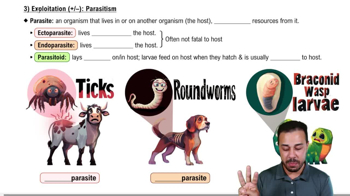
Parasitic plants are those that derive some or all of their nutritional requirements from another living plant. They attach to the host plant through structures called haustoria, which penetrate the host's tissues to access water and nutrients. Examples include mistletoe and dodder.
Video consigliato:
02:37
3) Exploitation (+/-): Parasitism

Mutualistic Associations

Mutualistic associations refer to interactions between two different species where both benefit. In the context of fungi and plant roots, mycorrhizal fungi form mutualistic relationships with plant roots, enhancing water and nutrient absorption for the plant while receiving carbohydrates and other organic compounds in return.
Video consigliato:
04:07
Motor, Sensory, and Association Areas