
Ch. 37 - Soil and Plant Nutrition
Campbell - Campbell Biology 12th Edition
Urry12th EditionCampbell BiologyISBN: 9785794169850Non è quello che usi tu?Cambia libro di testo
Capitolo 37, Problema 3

Mycorrhizae enhance plant nutrition mainly by:
a. Absorbing water and minerals through the fungal hyphae
b. Providing sugar to root cells, which have no chloroplasts
c. Converting atmospheric nitrogen to ammonia
d. Enabling the roots to parasitize neighboring plants

Guida verificata passo dopo passo
1
Understand the role of mycorrhizae: Mycorrhizae are symbiotic associations between fungi and plant roots. They play a crucial role in enhancing plant nutrition.
Identify the main function of mycorrhizae: The primary function of mycorrhizae is to increase the surface area for absorption, allowing plants to access more water and nutrients, particularly phosphorus, from the soil.
Evaluate each option: a) Mycorrhizae absorb water and minerals through the fungal hyphae, b) Mycorrhizae do not provide sugar to root cells; instead, they receive carbohydrates from the plant, c) Mycorrhizae do not convert atmospheric nitrogen to ammonia; this is typically done by nitrogen-fixing bacteria, d) Mycorrhizae do not enable roots to parasitize neighboring plants.
Focus on the correct option: Option a) is correct because mycorrhizae enhance plant nutrition by absorbing water and minerals through the fungal hyphae, which extend into the soil beyond the root zone.
Conclude with the symbiotic benefit: The relationship is mutualistic, where the plant provides carbohydrates to the fungus, and in return, the fungus aids in nutrient and water absorption, benefiting the plant's growth and health.

Risposta video verificata per un problema simile:

Questa soluzione video è stata consigliata dai nostri tutor come utile per risolvere questo problema.
Durata del video:
2m

Concetti chiave

Ecco i concetti essenziali che devi comprendere per rispondere correttamente alla domanda.

Mycorrhizae

Mycorrhizae are symbiotic associations between fungi and plant roots. These fungi extend the root system's reach, enhancing the plant's ability to absorb water and essential minerals from the soil. This relationship is mutually beneficial, as the plant provides carbohydrates to the fungi, which in turn improve the plant's nutrient uptake.
Video consigliato:
09:57
Fungi - 2

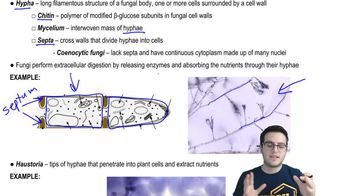
Fungal Hyphae

Fungal hyphae are the thread-like structures that make up the body of a fungus. In mycorrhizal associations, these hyphae penetrate the soil and increase the surface area for water and nutrient absorption. This extensive network allows plants to access nutrients that are otherwise difficult to reach, such as phosphorus and nitrogen.
Video consigliato:
09:57
Fungi - 2

Symbiotic Relationships in Plants

Symbiotic relationships in plants involve close interactions with other organisms that are mutually beneficial. In the case of mycorrhizae, the plant benefits from enhanced nutrient and water uptake, while the fungus receives carbohydrates produced by the plant through photosynthesis. This cooperation is crucial for plant health and growth, especially in nutrient-poor soils.
Video consigliato:
12:33
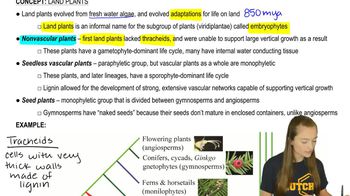
Land Plants