Ch. 41 - Animal Nutrition
Campbell - Campbell Biology 12th Edition
Urry12th EditionCampbell BiologyISBN: 9785794169850Non è quello che usi tu?Cambia libro di testo
Capitolo 41, Problema 5

If you put the following events in the order they occur in the human digestive system, the third event in the series would be
a. Cells in gastric pits secrete protons.
b. Pepsin activates pepsinogen.
c. HCl activates pepsinogen.
d. Partially digested food enters the small intestine.

Guida verificata passo dopo passo
1
Begin by understanding the sequence of events in the human digestive system, focusing on the stomach's role in digestion.
Recognize that the stomach secretes hydrochloric acid (HCl) which plays a crucial role in activating digestive enzymes.
Identify that pepsinogen, an inactive enzyme precursor, is activated by HCl to form pepsin, which is essential for protein digestion.
Understand that pepsin, once activated, can further activate more pepsinogen molecules, creating a positive feedback loop.
Finally, note that after partial digestion in the stomach, the food moves into the small intestine for further digestion and absorption.

Risposta video verificata per un problema simile:

Questa soluzione video è stata consigliata dai nostri tutor come utile per risolvere questo problema.
Durata del video:
3m

Concetti chiave

Ecco i concetti essenziali che devi comprendere per rispondere correttamente alla domanda.

Gastric Pits and Proton Secretion

Gastric pits are indentations in the stomach lining that contain cells responsible for secreting gastric juices, including hydrochloric acid (HCl) and protons (H+ ions). These secretions create an acidic environment necessary for the activation of digestive enzymes and the breakdown of food. Understanding this process is crucial for identifying the sequence of events in digestion.
Video consigliato:
01:34
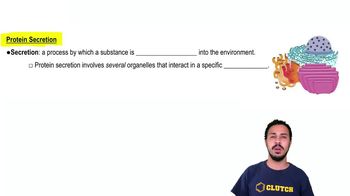
Protein Secretion

Activation of Pepsinogen by HCl

Pepsinogen is an inactive enzyme precursor secreted by the stomach lining. It is converted into its active form, pepsin, by the acidic environment created by HCl. This activation is essential for protein digestion, as pepsin breaks down proteins into smaller peptides. Recognizing this step helps in determining the order of digestive events.
Video consigliato:
02:37
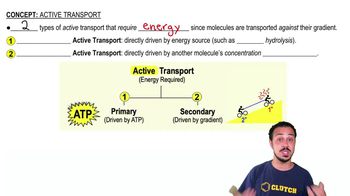
Active Transport

Role of Pepsin in Digestion

Pepsin is a proteolytic enzyme that plays a critical role in the digestion of proteins in the stomach. Once activated from pepsinogen, pepsin cleaves peptide bonds, facilitating the breakdown of proteins into smaller peptides. This process is vital for efficient nutrient absorption and is a key event in the digestive sequence.
Video consigliato:
05:11
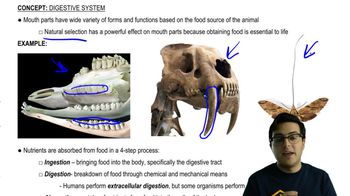
Digestion and Digestive Tracts