Ch. 41 - Animal Nutrition
Campbell - Campbell Biology 12th Edition
Urry12th EditionCampbell BiologyISBN: 9785794169850Non è quello che usi tu?Cambia libro di testo
Capitolo 41, Problema 7

If you were to jog 1 km a few hours after lunch, which stored fuel would you probably tap?
a. Muscle proteins
b. Muscle and liver glycogen
c. Fat in the liver
d. Fat in adipose tissue

Guida verificata passo dopo passo
1
Understand that the body uses different energy sources depending on the intensity and duration of the exercise, as well as the time since the last meal.
Recognize that glycogen stored in muscles and the liver is a primary source of energy for short-term, moderate-intensity activities like jogging.
Consider that after a meal, the body will have replenished its glycogen stores, making glycogen a readily available energy source.
Note that fat stores, such as those in adipose tissue, are typically used for longer-duration, lower-intensity activities or when glycogen stores are depleted.
Conclude that for a short jog a few hours after eating, the body is most likely to use muscle and liver glycogen as the primary fuel source.

Risposta video verificata per un problema simile:

Questa soluzione video è stata consigliata dai nostri tutor come utile per risolvere questo problema.
Durata del video:
2m

Concetti chiave

Ecco i concetti essenziali che devi comprendere per rispondere correttamente alla domanda.

Glycogen Storage and Utilization

Glycogen is a stored form of glucose found primarily in the liver and muscles. After a meal, excess glucose is converted into glycogen for storage. During physical activities like jogging, the body first utilizes glycogen reserves for quick energy, especially from muscle glycogen, as it is readily accessible and can be rapidly mobilized to meet energy demands.
Video consigliato:
05:08
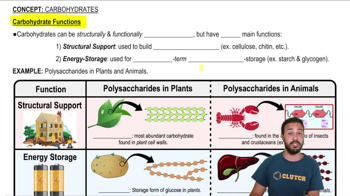
Carbohydrate Functions

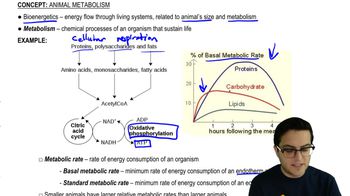
Energy Metabolism

Energy metabolism refers to the biochemical processes that convert food into energy. The body prioritizes different energy sources based on availability and intensity of activity. For moderate activities like jogging, carbohydrates stored as glycogen are the primary energy source, as they provide a quick and efficient release of energy compared to fats or proteins.
Video consigliato:
07:08
Metabolic Rate

Role of Adipose Tissue in Energy Storage

Adipose tissue stores energy in the form of fat, which is a long-term energy reserve. While fats provide a high energy yield, they are not the body's immediate choice for energy during short, moderate activities. Instead, fats are typically mobilized during prolonged, low-intensity exercise or when glycogen stores are depleted, making them less likely to be used for a short jog after a meal.
Video consigliato:
06:20
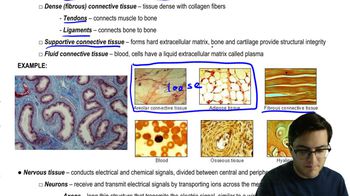
Connective and Nervous Tissues