Ch. 6 - A Tour of the Cell
Campbell - Campbell Biology 12th Edition
Urry12th EditionCampbell BiologyISBN: 9785794169850Non è quello che usi tu?Cambia libro di testo
Capitolo 6, Problema 4

Cyanide binds to at least one molecule involved in producing ATP. If a cell is exposed to cyanide, most of the cyanide will be found within the
a. Mitochondria.
b. Ribosomes.
c. Peroxisomes.
d. Lysosomes.

Guida verificata passo dopo passo
1
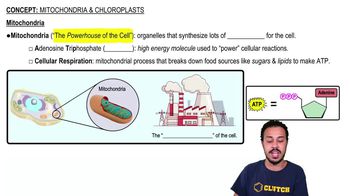
Understand the role of mitochondria in ATP production: Mitochondria are known as the powerhouse of the cell because they are the primary site of ATP production through cellular respiration.
Identify the process of ATP production: ATP is produced mainly through oxidative phosphorylation, which occurs in the inner membrane of the mitochondria.
Recognize the effect of cyanide: Cyanide inhibits cytochrome c oxidase, a key enzyme in the electron transport chain located in the mitochondria, preventing ATP production.
Consider the location of cyanide action: Since cyanide targets the electron transport chain, it will primarily affect the mitochondria where this chain is located.
Conclude the location of cyanide accumulation: Given its action on the electron transport chain, cyanide will be found in the mitochondria, where it disrupts ATP synthesis.

Risposta video verificata per un problema simile:

Questa soluzione video è stata consigliata dai nostri tutor come utile per risolvere questo problema.
Durata del video:
1m

Concetti chiave

Ecco i concetti essenziali che devi comprendere per rispondere correttamente alla domanda.

ATP Production

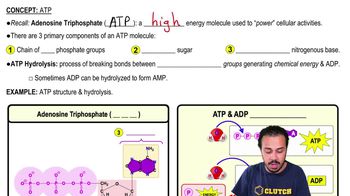
ATP, or adenosine triphosphate, is the primary energy carrier in cells. It is produced mainly in the mitochondria through cellular respiration, which includes glycolysis, the citric acid cycle, and oxidative phosphorylation. Understanding ATP production is crucial because cyanide disrupts this process, affecting energy availability in cells.
Video consigliato:

Mitochondria Function

Mitochondria are organelles known as the powerhouses of the cell, where most ATP is generated. They host the electron transport chain, a series of complexes that facilitate oxidative phosphorylation. Cyanide targets this chain, inhibiting ATP synthesis, which explains why cyanide accumulates in mitochondria.
Video consigliato:
04:19
Mitochondria

Cyanide Toxicity

Cyanide is a potent inhibitor of cytochrome c oxidase, a key enzyme in the electron transport chain within mitochondria. By binding to this enzyme, cyanide prevents the transfer of electrons, halting ATP production and leading to cellular energy failure. This mechanism highlights why cyanide exposure primarily affects mitochondrial function.
Video consigliato:
05:38
Lysosomes & Peroxisomes