Ch. 27 - Bacteria and Archaea
Campbell - Campbell Biology 11th Edition
Urry11th EditionCampbell BiologyISBN: 9789357423311Non è quello che usi tu?Cambia libro di testo
Capitolo 27, Problema 5

Which of the following describes a bacterium that lives in the human intestine and causes disease? (A)commensalist (B)decomposer (C)gut mutualist (D)symbiotic pathogen

Guida verificata passo dopo passo
1
Understand the definitions of the terms provided in the options: (A) Commensalist refers to an organism that benefits from its host without harming or helping it. (B) Decomposer refers to an organism that breaks down dead organic matter. (C) Gut mutualist refers to an organism that lives in the gut and provides benefits to its host while also benefiting itself. (D) Symbiotic pathogen refers to an organism that lives in a symbiotic relationship with its host but causes harm or disease.
Identify the key characteristics of the bacterium described in the problem: It lives in the human intestine and causes disease.
Match the bacterium's characteristics to the definitions of the terms provided in the options. Since the bacterium causes disease, it cannot be a commensalist or a gut mutualist, as these do not harm the host.
Eliminate the option 'decomposer' because decomposers break down dead organic matter, which does not align with the description of the bacterium living in the human intestine and causing disease.
Conclude that the correct description of the bacterium is 'symbiotic pathogen,' as it lives in a symbiotic relationship with the host (human intestine) but causes harm or disease.

Risposta video verificata per un problema simile:

Questa soluzione video è stata consigliata dai nostri tutor come utile per risolvere questo problema.
Durata del video:
1m

Concetti chiave

Ecco i concetti essenziali che devi comprendere per rispondere correttamente alla domanda.

Pathogen

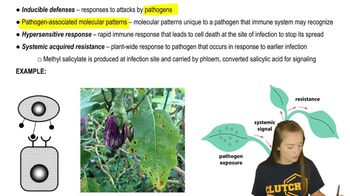
A pathogen is an organism that causes disease in its host. In the context of bacteria, pathogens can invade the host's tissues, evade the immune system, and produce toxins, leading to various health issues. Understanding the role of pathogens is crucial for identifying harmful bacteria in the human body.
Video consigliato:
08:59
Pathogen Defenses

Symbiosis

Symbiosis refers to the interaction between two different organisms living in close physical proximity, which can be beneficial, neutral, or harmful. In the case of bacteria, some can be symbiotic pathogens, meaning they can coexist with the host while also causing disease under certain conditions. This concept helps differentiate between beneficial and harmful relationships.

Gut Microbiota

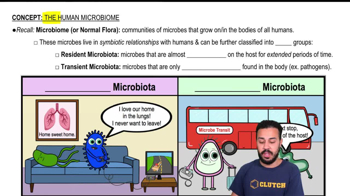
Gut microbiota consists of the diverse community of microorganisms residing in the human intestine, playing a vital role in digestion, metabolism, and immune function. While many gut bacteria are beneficial or neutral, some can become pathogenic, leading to disease. Understanding gut microbiota is essential for recognizing how certain bacteria can impact human health.
Video consigliato:
03:25
The Human Microbiome