
Ch. 50 - Sensory and Motor Mechanisms
Campbell - Campbell Biology 11th Edition
Urry11th EditionCampbell BiologyISBN: 9789357423311Non è quello che usi tu?Cambia libro di testo
Capitolo 50, Problema 4

Which sensory distinction is not encoded by a difference in neuron identity?
a. White and red
b. Red and green
c. Loud and faint
d. Salty and sweet

Guida verificata passo dopo passo
1
Understand that sensory distinctions can be encoded by different mechanisms, such as different types of neurons or different patterns of neuron activity.
Consider the options: colors (white, red, green) are typically distinguished by different types of photoreceptor cells in the retina, each sensitive to different wavelengths of light.
Taste (salty and sweet) is encoded by different types of taste receptor cells, each sensitive to different chemical compounds.
Sound (loud and faint) is not encoded by different types of neurons, but rather by the frequency and amplitude of the sound waves, which affect the rate of neuron firing.
Identify that the distinction between loud and faint sounds is based on the intensity of the stimulus rather than the identity of the neurons, making it different from the other options.
Conclude that the correct answer is the one where the distinction is not based on neuron identity, which is option c: loud and faint.

Risposta video verificata per un problema simile:

Questa soluzione video è stata consigliata dai nostri tutor come utile per risolvere questo problema.
Durata del video:
41s

Concetti chiave

Ecco i concetti essenziali che devi comprendere per rispondere correttamente alla domanda.

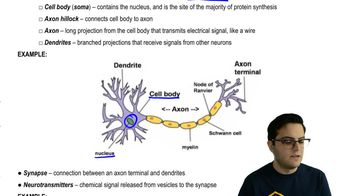
Neuron Identity

Neuron identity refers to the specific characteristics and functions of neurons, which are determined by their genetic makeup and the types of neurotransmitters they produce. Different neurons are specialized to respond to specific stimuli, such as light, sound, or taste, allowing the brain to interpret various sensory inputs.
Video consigliato:
02:42
Neurons

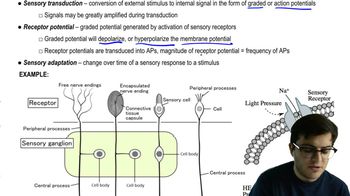
Sensory Encoding

Sensory encoding is the process by which sensory information is translated into neural signals. This involves the activation of specific neurons that correspond to particular sensory modalities, such as color or sound intensity. The brain interprets these signals to differentiate between different sensory experiences.
Video consigliato:
06:25
Sensory Systems

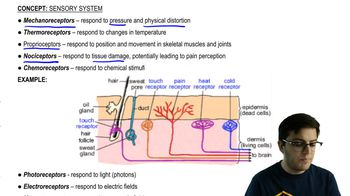
Intensity vs. Quality in Sensory Perception

Intensity refers to the strength or magnitude of a sensory stimulus, while quality pertains to the type or nature of the stimulus, such as color or taste. Intensity differences, like loud and faint sounds, are often encoded by the frequency of neuron firing rather than distinct neuron types, unlike quality distinctions, which may involve different neuron identities.
Video consigliato:
02:54
Sensory Receptors