
Ch. 29 - Fungi
Freeman - Biological Science 8th Edition
Freeman8th EditionBiological ScienceISBN: 9780138276263Non è quello che usi tu?Cambia libro di testo
Capitolo 29, Problema 16

Propose an experiment to test whether Pilobolus shoots its sporangia preferentially toward light. Hypothesize why such a preference might be advantageous.

Guida verificata passo dopo passo
1
Step 1: Formulate a hypothesis. Hypothesize that Pilobolus fungi shoot their sporangia towards light sources because it increases the chances of the spores landing in environments favorable for growth, where light is available for photosynthesis by nearby plants, which could enhance the nutrient richness of the soil.
Step 2: Design the experiment. Use multiple Petri dishes with Pilobolus cultures and place them in a controlled environment. Set up different light conditions for each group of dishes: one with light coming from only one direction, another with light uniformly distributed, and a third with no light.
Step 3: Implement the experiment. Allow the fungi to grow under these conditions for several days. Ensure that all other environmental factors such as temperature, humidity, and nutrient availability are kept constant across all groups.
Step 4: Observe and record data. Monitor the direction in which the sporangia are shot in each setup. Record the number of sporangia that are shot towards the light source versus those that are not, and compare these numbers across the different lighting conditions.
Step 5: Analyze the results and draw conclusions. Compare the data from the different light conditions to determine if there is a significant preference for shooting sporangia towards light sources. Evaluate whether the initial hypothesis is supported by the data and discuss potential reasons for the observed behavior, considering the ecological advantages of spore dispersal towards light.

Risposta video verificata per un problema simile:

Questa soluzione video è stata consigliata dai nostri tutor come utile per risolvere questo problema.
Durata del video:
1m

Concetti chiave

Ecco i concetti essenziali che devi comprendere per rispondere correttamente alla domanda.

Phototropism

Phototropism is the growth response of organisms to light direction, where plants and fungi orient their growth towards light sources. This phenomenon is crucial for maximizing photosynthesis in plants, but in fungi like Pilobolus, it may enhance spore dispersal efficiency. Understanding phototropism helps explain how organisms adapt to their environments for survival and reproduction.
Video consigliato:
02:00
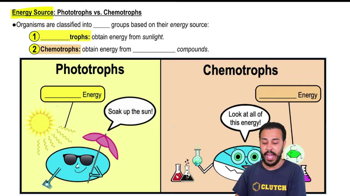
Energy Source: Phototrophs vs. Chemotrophs

Sporangia and Spore Dispersal

Sporangia are specialized structures in fungi and plants that produce and release spores for reproduction. In Pilobolus, the sporangium is propelled towards light, which may increase the likelihood of spores landing in favorable environments for germination. This mechanism of spore dispersal is vital for the propagation and survival of the species.
Video consigliato:
03:20
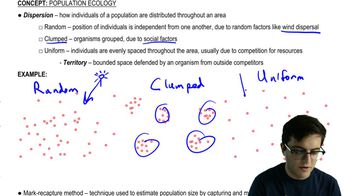
Dispersion

Natural Selection and Adaptation

Natural selection is the process by which organisms better adapted to their environment tend to survive and produce more offspring. An advantage of Pilobolus shooting its sporangia towards light could be that it increases the chances of spores reaching nutrient-rich substrates, enhancing survival rates. This adaptive behavior illustrates how evolutionary pressures shape the traits of organisms over time.
Video consigliato:
07:48
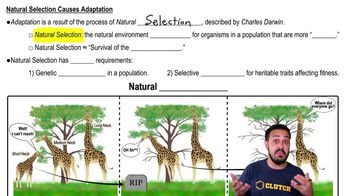
Natural Selection Causes Adaptation