
Ch. 34 - Plant Form and Function
Freeman - Biological Science 8th Edition
Freeman8th EditionBiological ScienceISBN: 9780138276263Non è quello che usi tu?Cambia libro di testo
Capitolo 34, Problema 1

What is a sieve-tube element?
a. The sugar-conducting cell found in phloem
b. The widened, perforation-containing, water-conducting cell found only in angiosperms
c. The nutrient- and water-absorbing cells found in root hairs
d. The nucleated and organelle-rich support cell found in phloem

Guida verificata passo dopo passo
1
Understand that sieve-tube elements are a type of cell found in the phloem of vascular plants.
Recognize that the primary function of sieve-tube elements is to conduct sugars and other organic nutrients throughout the plant.
Note that sieve-tube elements are unique because they lack a nucleus and most organelles, which allows for efficient transport of nutrients.
Identify that sieve-tube elements are connected end-to-end to form long tubes, facilitating the flow of nutrients.
Remember that sieve-tube elements are associated with companion cells, which help maintain their function and provide metabolic support.

Risposta video verificata per un problema simile:

Questa soluzione video è stata consigliata dai nostri tutor come utile per risolvere questo problema.
Durata del video:
1m

Concetti chiave

Ecco i concetti essenziali che devi comprendere per rispondere correttamente alla domanda.

Phloem

Phloem is a type of vascular tissue in plants responsible for the transport of nutrients, particularly sugars, throughout the plant. It consists of various cell types, including sieve-tube elements, companion cells, and phloem fibers. Phloem plays a crucial role in distributing the products of photosynthesis from leaves to other parts of the plant.
Video consigliato:
07:10
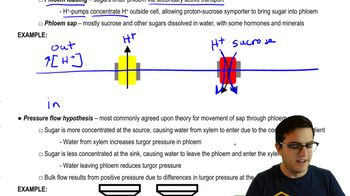
Pressure Flow Hypothesis

Sieve-Tube Elements

Sieve-tube elements are specialized cells in the phloem that facilitate the transport of sugars and other organic nutrients. These cells are elongated and connected end-to-end, forming a continuous tube. They lack a nucleus and most organelles, allowing for efficient flow of sap, and are supported by companion cells that help maintain their function.
Video consigliato:
03:36
Elements of Life

Companion Cells

Companion cells are nucleated cells found in the phloem that are closely associated with sieve-tube elements. They play a vital role in maintaining the function and viability of sieve-tube elements by providing metabolic support and facilitating the loading and unloading of sugars into the phloem. Their presence ensures the efficient transport of nutrients throughout the plant.
Video consigliato:
05:33
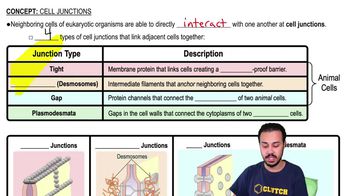
Cell Junctions