
Ch. 37 - Plant Sensory Systems, Signals, and Responses
Freeman - Biological Science 8th Edition
Freeman8th EditionBiological ScienceISBN: 9780138276263Non è quello che usi tu?Cambia libro di testo
Capitolo 37, Problema 14d

Leaflets of Mimosa pudica (common names: sensitive plant, touch-me-not) have a remarkable ability to close up in response to being touched or physically moved.
How fast can the leaflets close?
How does this occur?
And more importantly, what benefit could this unusual response provide to the plant?
If just the leaflets located toward the end of a leaf are touched, the adjacent leaflets close in fairly rapid succession until all leaflets on a leaf close up.
Explain how electrical signaling may be involved in this response.

Guida verificata passo dopo passo
1
Mimosa pudica exhibits a rapid plant movement known as thigmonasty, where the leaflets close in response to touch or physical disturbance.
The closing of the leaflets is facilitated by changes in turgor pressure within the pulvini, which are specialized motor cells located at the base of each leaflet.
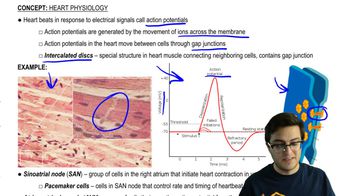
When a leaflet is touched, an electrical signal, similar to an action potential in animals, is generated and travels through the plant tissue.
This electrical signal triggers the rapid efflux of potassium ions (K+) from the pulvini cells, leading to a loss of water and a decrease in turgor pressure, causing the leaflets to fold.
The closing of the leaflets may serve as a defense mechanism to deter herbivores or to reduce water loss by minimizing the surface area exposed to the environment.

Risposta video verificata per un problema simile:

Questa soluzione video è stata consigliata dai nostri tutor come utile per risolvere questo problema.
Durata del video:
1m

Concetti chiave

Ecco i concetti essenziali che devi comprendere per rispondere correttamente alla domanda.

Thigmonasty

Thigmonasty refers to the non-directional movement of plant parts in response to touch or physical stimuli. In Mimosa pudica, this rapid movement is a defense mechanism against herbivores and environmental stress. The movement is caused by changes in turgor pressure within the plant cells, leading to the folding of leaflets.

Electrical Signaling in Plants

Electrical signaling in plants involves the transmission of electrical impulses through plant tissues, similar to nerve impulses in animals. In Mimosa pudica, these signals trigger rapid changes in cell turgor pressure, causing the leaflets to close. This signaling is facilitated by ion channels and changes in membrane potential, allowing for quick communication across the plant.
Video consigliato:
07:36
Electrical Signals of the Heart

Adaptive Advantage of Leaflet Closure

The ability of Mimosa pudica to close its leaflets provides several adaptive advantages. It can deter herbivores by making the plant appear less appealing or by startling them. Additionally, leaflet closure can reduce water loss and protect the plant from environmental stressors like heavy rain or wind, enhancing its survival in various habitats.
Video consigliato:
Percorso guidato
05:24
Adaptive Radiation
Pratica correlata
Domanda del libro di testo

Leaflets of Mimosa pudica (common names: sensitive plant, touch-me-not) have a remarkable ability to close up in response to being touched or physically moved.

How fast can the leaflets close? How does this occur?

And more importantly, what benefit could this unusual response provide to the plant?

The mechanism of leaflet closure is similar to what happens during the shrinking of guard cells and closing of stomata (see Figure 37.22). When in the open position, special cells on the upper surface of Mimosa leaflets are filled with water and are under pressure.

Explain how osmosis and flow of ions into and out of these special cells may be involved in leaflet closure and reopening.

839
views
Domanda del libro di testo

Leaflets of Mimosa pudica (common names: sensitive plant, touch-me-not) have a remarkable ability to close up in response to being touched or physically moved.

How fast can the leaflets close?

How does this occur?

And more importantly, what benefit could this unusual response provide to the plant?

Which of the following terms best describes the leaflet movement?

a. Thigmonastic movements

b. Thigmotropism

c. Thigmomorphogenesis

d. Apical dominance

863
views
Domanda del libro di testo

Leaflets of Mimosa pudica (common names: sensitive plant, touch-me-not) have a remarkable ability to close up in response to being touched or physically moved.

How fast can the leaflets close? How does this occur?

And more importantly, what benefit could this unusual response provide to the plant? Researchers have hypothesized that rapid leaf movements in Mimosa serve as a defense mechanism (e.g., closing leaflets may deter plant-eating insects).

Propose an experiment to test this hypothesis.

645
views
Domanda del libro di testo

Leaflets of Mimosa pudica (common names: sensitive plant, touch-me-not) have a remarkable ability to close up in response to being touched or physically moved.

How fast can the leaflets close?

How does this occur?

And more importantly, what benefit could this unusual response provide to the plant?

Researchers studied the rate of closing and reopening of leaflets by measuring changes in the distance between opposing leaflets after being touched. Their results are shown in the accompanying graph (d/dmax is actual leaflet distance relative to maximal leaflet distance).

How long does it take for leaflets to close?

How long to reopen?

729
views
Domanda del libro di testo

Leaflets of Mimosa pudica (common names: sensitive plant, touch-me-not) have a remarkable ability to close up in response to being touched or physically moved.

How fast can the leaflets close?

How does this occur?

And more importantly, what benefit could this unusual response provide to the plant?

Mimosa leaflets also close on their own at dusk and reopen at dawn (this cycle develops as a circadian rhythm).

What receptor molecule mentioned in this chapter is likely involved in regulating this process?

747
views