Ch. 38 - Flowering Plant Reproduction and Development
Freeman - Biological Science 8th Edition
Freeman8th EditionBiological ScienceISBN: 9780138276263Non è quello che usi tu?Cambia libro di testo
Capitolo 38, Problema 3

Which of the following does not occur during embryogenesis?
a. Formation of the radial axis
b. Production of the suspensor
c. Formation of the cotyledons and hypocotyl
d. Formation of the leaf lateral and proximal–distal axes

Guida verificata passo dopo passo
1
Understand the term 'embryogenesis': Embryogenesis is the process by which the embryo forms and develops. It involves a series of stages that include cell division, differentiation, and morphogenesis, leading to the formation of the basic body plan of the organism.
Identify the key processes in embryogenesis: During embryogenesis, several key processes occur, such as the establishment of body axes (e.g., radial, anterior-posterior), formation of primary structures (e.g., cotyledons, hypocotyl), and development of supporting structures (e.g., suspensor in plants).
Analyze each option: a. Formation of the radial axis is a part of establishing the body plan during embryogenesis. b. Production of the suspensor is involved in early plant embryogenesis, providing nutrients to the developing embryo. c. Formation of the cotyledons and hypocotyl is part of the development of the embryo's primary structures. d. Formation of the leaf lateral and proximal-distal axes typically occurs later in development, during organogenesis, not embryogenesis.
Determine which process is not part of embryogenesis: Compare the processes listed in the options with those typically occurring during embryogenesis. Identify the one that is more associated with later stages of development.
Conclude with the correct answer: Based on the analysis, identify the option that does not occur during embryogenesis, focusing on the timing and nature of the developmental processes involved.

Risposta video verificata per un problema simile:

Questa soluzione video è stata consigliata dai nostri tutor come utile per risolvere questo problema.
Durata del video:
1m

Concetti chiave

Ecco i concetti essenziali che devi comprendere per rispondere correttamente alla domanda.

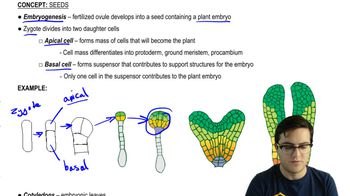
Embryogenesis

Embryogenesis is the process by which the embryo forms and develops, starting from a fertilized egg. It involves cell division, differentiation, and morphogenesis, leading to the establishment of the basic body plan and organ systems. Key stages include the formation of axes, tissues, and organs necessary for the organism's development.
Video consigliato:
04:58
Embryogenesis

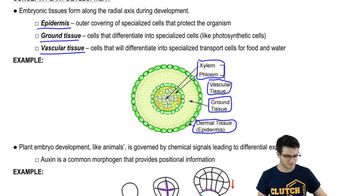
Radial Axis Formation

Radial axis formation refers to the development of symmetry around a central point, which is crucial in early embryonic development. This axis helps define the spatial organization of cells and tissues, contributing to the overall structure and function of the developing embryo. It is a fundamental aspect of establishing the body plan.
Video consigliato:
04:31
Embryonic Tissues and Pattern Formation

Cotyledons and Hypocotyl Formation

Cotyledons are the first leaves that appear on a plant embryo, while the hypocotyl is the stem-like part connecting the cotyledons to the root. Their formation is a critical step in plant embryogenesis, as they play essential roles in nutrient storage and seedling development, supporting the plant's growth after germination.
Video consigliato:
03:08
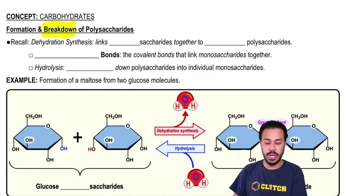
Formation & Breakdown of Polysaccharides