Ch. 41 - Animal Nutrition
Freeman - Biological Science 8th Edition
Freeman8th EditionBiological ScienceISBN: 9780138276263Non è quello che usi tu?Cambia libro di testo
Capitolo 41, Problema 9

When food is plentiful, animals tend to store most of what they eat as fat. Why is this?

Guida verificata passo dopo passo
1
Understand the role of fat: Fat serves as a vital energy reserve. When food is abundant, animals convert excess nutrients into fat, which can be stored in the body for future use when food might be scarce.
Recognize the evolutionary advantage: Storing fat during times of food abundance is an evolutionary adaptation that allows animals to survive periods of famine. This ability to store energy efficiently gives them a survival advantage.
Learn about metabolic processes: The process of converting excess food into fat involves metabolic pathways such as lipogenesis, which is the synthesis of fat from carbohydrates and proteins in the diet.
Consider hormonal regulation: Hormones like insulin play a crucial role in the process of fat storage. Insulin promotes the uptake of glucose by cells and its conversion into fat.
Explore the impact of lifestyle: In the wild, this mechanism is crucial for survival. However, in domesticated or human environments where food supply is consistently high, this can lead to obesity and related health issues.

Risposta video verificata per un problema simile:

Questa soluzione video è stata consigliata dai nostri tutor come utile per risolvere questo problema.
Durata del video:
1m

Concetti chiave

Ecco i concetti essenziali che devi comprendere per rispondere correttamente alla domanda.

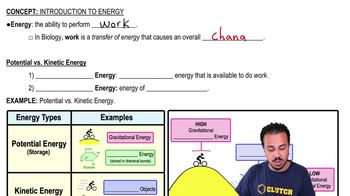
Energy Storage

Animals store excess energy from food in the form of fat, which serves as a long-term energy reserve. This process is crucial for survival, allowing animals to access energy during periods of scarcity. Fat is an efficient storage form because it provides more energy per gram compared to carbohydrates or proteins.
Video consigliato:
04:58
Introduction to Energy

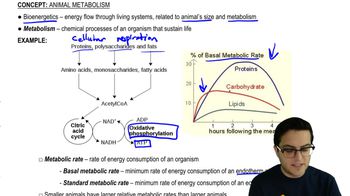
Metabolic Regulation

The regulation of metabolism plays a key role in how animals process food. When food is abundant, hormonal signals, such as insulin, promote the conversion of glucose into fat for storage. This metabolic shift ensures that energy is conserved for future use, particularly during times when food is less available.
Video consigliato:
07:08
Metabolic Rate

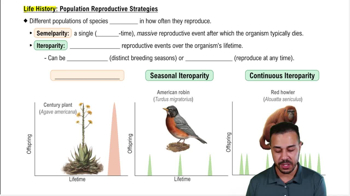
Survival Strategy

Storing fat is a critical survival strategy for many animals, enabling them to endure periods of food scarcity. This behavior is often influenced by environmental factors and evolutionary adaptations, where animals that effectively store energy are more likely to survive and reproduce, passing on their traits to future generations.
Video consigliato:
02:51
Life History: Population Reproductive Strategies
Pratica correlata
Domanda del libro di testo

Explain why insulin injections are more effective in controlling the blood glucose level in individuals with type 1 diabetes mellitus than in those with type 2 diabetes.

598
views

Domanda del libro di testo

Among vertebrates, the large intestine exists only in lineages that are primarily terrestrial (amphibians, reptiles, and mammals). Propose a hypothesis to explain this observation.

789
views
Domanda del libro di testo

Why is it important that the small intestine has a much greater surface area than the stomach or esophagus?

1522
views
Domanda del libro di testo

Minnows are mainly carnivorous, eating insects and other small animals. However, herbivory has evolved independently in minnows several times.

What changes in digestive structure and function are associated with the evolution of herbivory?

Which of the following is true of the digestive tracts of minnows?

a. They are incomplete but have both a mouth and an anus.

b. They are complete, facilitating compartmentalization of digestion in different organs.

c. They are incomplete, with no accessory organs.

d. They are complete and include a large gastrovascular cavity.

694
views
Domanda del libro di testo

Why is oral rehydration therapy with a solution of sodium chloride and glucose an effective treatment for dehydration?

a. The sodium and glucose decrease urine output.

b. The sodium and glucose facilitate water absorption by the small intestine.

c. The sodium and glucose help kill intestinal bacteria.

d. The sodium and glucose make the person thirsty.

1147
views
Domanda del libro di testo

Minnows are mainly carnivorous, eating insects and other small animals. However, herbivory has evolved independently in minnows several times.

What changes in digestive structure and function are associated with the evolution of herbivory?

Like cichlids, minnows use their pharyngeal jaws to process food. Suggest some possible structural differences between the teeth on the pharyngeal jaws of carnivorous and herbivorous minnows.

751
views