Ch. 50 - Behavioral Ecology
Freeman - Biological Science 8th Edition
Freeman8th EditionBiological ScienceISBN: 9780138276263Non è quello che usi tu?Cambia libro di testo
Capitolo 50, Problema 1

What do proximate explanations of behavior focus on? a. how displays and other types of behavior have changed through time, or evolved b. the 'adaptive significance' of a behavior c. genetic, neurological, and hormonal mechanisms of behavior d. appropriate experimental methods when studying behavior

Guida verificata passo dopo passo
1
Understand the concept of proximate explanations in biology: Proximate explanations focus on the immediate mechanisms that cause a behavior, such as genetic, neurological, hormonal, and physiological factors.
Differentiate between proximate and ultimate explanations: Proximate explanations address 'how' a behavior occurs, while ultimate explanations address 'why' a behavior has evolved or its adaptive significance.
Analyze the options provided in the question: Option (a) refers to evolutionary changes, which are part of ultimate explanations. Option (b) discusses adaptive significance, which is also an ultimate explanation. Option (c) mentions genetic, neurological, and hormonal mechanisms, which align with proximate explanations. Option (d) refers to experimental methods, which are tools rather than explanations.
Focus on the correct alignment: Since proximate explanations deal with mechanisms like genetics, neurology, and hormones, option (c) is the most relevant answer.
Conclude that proximate explanations of behavior focus on the immediate biological mechanisms underlying the behavior, as described in option (c).

Risposta video verificata per un problema simile:

Questa soluzione video è stata consigliata dai nostri tutor come utile per risolvere questo problema.
Durata del video:
3m

Concetti chiave

Ecco i concetti essenziali che devi comprendere per rispondere correttamente alla domanda.

Proximate vs. Ultimate Explanations

Proximate explanations of behavior focus on the immediate causes and mechanisms that underlie a behavior. This includes understanding the genetic, neurological, and hormonal factors that influence how an organism behaves at a specific moment. In contrast, ultimate explanations consider the evolutionary significance and adaptive value of behaviors over time.
Video consigliato:
02:37
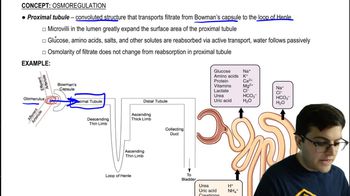
Proximal Tubule

Genetic Mechanisms

Genetic mechanisms refer to the ways in which genes influence behavior through inherited traits. These mechanisms can determine predispositions to certain behaviors, affecting how an organism interacts with its environment. Understanding these genetic influences is crucial for comprehending the proximate causes of behavior.
Video consigliato:
Percorso guidato
02:00
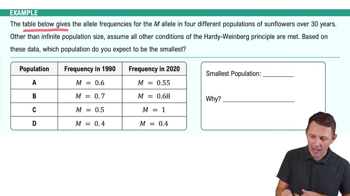
Genetic Drift Example 1

Neurological and Hormonal Influences

Neurological and hormonal influences encompass the brain's role and the effects of hormones on behavior. The nervous system processes stimuli and coordinates responses, while hormones can modulate behavior by affecting mood, energy levels, and stress responses. Together, these factors provide insight into the biological underpinnings of behavior.
Video consigliato:
08:18
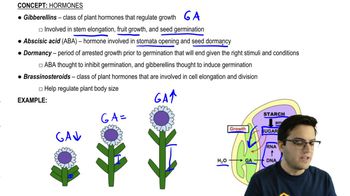
Plant Hormones and Senescence