Ch. 53 - Ecosystems and Global Ecology
Freeman - Biological Science 8th Edition
Freeman8th EditionBiological ScienceISBN: 9780138276263Non è quello che usi tu?Cambia libro di testo
Capitolo 53, Problema 4

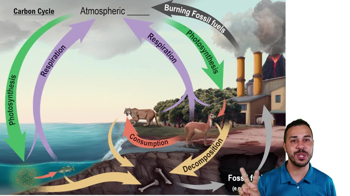
In a model of the carbon cycle, how would you label an arrow from the atmosphere to plants?


a. cellular respiration
b. photosynthesis
c. decomposition
d. consumption

Guida verificata passo dopo passo
1
Identify the process by which plants utilize carbon from the atmosphere. This process involves the conversion of carbon dioxide into organic compounds, primarily sugars, using the energy from sunlight.
Recognize that cellular respiration is the process by which organisms break down sugars to produce energy, releasing carbon dioxide as a byproduct, which is the opposite of what we are looking for.
Understand that decomposition refers to the breakdown of organic matter into simpler compounds, releasing carbon dioxide back into the atmosphere, which is also not the process we are looking for.
Consider that consumption generally refers to one organism eating another, which does not directly involve the transfer of carbon from the atmosphere to plants.
Conclude that the correct label for the arrow from the atmosphere to plants in the carbon cycle model is the process that captures atmospheric carbon dioxide and converts it into organic molecules in plants.

Risposta video verificata per un problema simile:

Questa soluzione video è stata consigliata dai nostri tutor come utile per risolvere questo problema.
Durata del video:
3m

Concetti chiave

Ecco i concetti essenziali che devi comprendere per rispondere correttamente alla domanda.

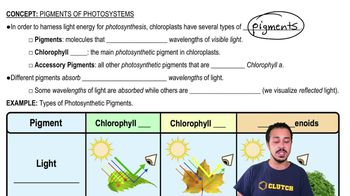
Photosynthesis

Photosynthesis is the process by which green plants, algae, and some bacteria convert light energy into chemical energy, specifically glucose, using carbon dioxide from the atmosphere and water. This process occurs primarily in the chloroplasts of plant cells and is essential for producing the organic compounds that serve as food for the plant and, ultimately, for other organisms in the ecosystem.
Video consigliato:
05:58
Pigments of Photosynthesis

Carbon Cycle

The carbon cycle is a biogeochemical cycle that describes the movement of carbon among the atmosphere, oceans, soil, and living organisms. It involves processes such as photosynthesis, respiration, decomposition, and combustion, which collectively regulate the levels of carbon dioxide in the atmosphere and are crucial for maintaining life on Earth.
Video consigliato:
04:20
Carbon Cycle

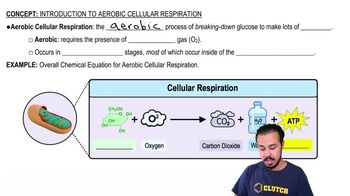
Cellular Respiration

Cellular respiration is the metabolic process by which cells convert glucose and oxygen into energy, carbon dioxide, and water. While it is a critical process for energy production in living organisms, it is not the process that describes the movement of carbon from the atmosphere to plants, which is specifically captured by photosynthesis.
Video consigliato:
03:39
Introduction to Cellular Respiration