Ch. 4 - Applications of the Derivative
Briggs - Calculus: Early Transcendentals 3rd Edition
Briggs3rd EditionCalculus: Early TranscendentalsISBN: 9780136847243Non è quello che usi tu?Cambia libro di testo
Capitolo 4, Problema 76b

Turning a corner with a pole
What is the length of the longest pole that can be carried horizontally around a corner at which a corridor that is a ft wide and a corridor that is b ft wide meet at right angles?

Guida verificata passo dopo passo
1
First, visualize the problem: You have two corridors meeting at a right angle, one is 'a' feet wide and the other is 'b' feet wide. You need to find the longest pole that can be carried horizontally around this corner.
Consider the pole as a line segment that needs to navigate the corner. The pole will touch the inner corner and the outer walls of the corridors. The key is to find the maximum length of this line segment.
Use the concept of similar triangles and geometry. The pole will form a right triangle with the walls of the corridors. The hypotenuse of this triangle is the pole, and the legs are the distances from the corner to the point where the pole touches the walls.
Set up the equation using the Pythagorean theorem. If the pole touches the walls at points (x, 0) and (0, y), then the equation is: x2+y2. You need to express x and y in terms of 'a' and 'b'.
To maximize the length of the pole, use calculus to find the critical points of the function derived from the geometry. This involves taking the derivative of the function with respect to x or y, setting it to zero, and solving for the maximum length.

Risposta video verificata per un problema simile:

Questa soluzione video è stata consigliata dai nostri tutor come utile per risolvere questo problema.
Durata del video:
11m

Concetti chiave

Ecco i concetti essenziali che devi comprendere per rispondere correttamente alla domanda.

Geometric Optimization

Geometric optimization involves finding the maximum or minimum values of a function subject to certain constraints. In this problem, we need to determine the longest pole that can fit around a corner, which requires analyzing the geometric relationship between the pole and the corridors' widths.
Video consigliato:
10:13
Intro to Applied Optimization: Maximizing Area

Pythagorean Theorem

The Pythagorean Theorem states that in a right triangle, the square of the length of the hypotenuse is equal to the sum of the squares of the lengths of the other two sides. This theorem is essential for calculating the effective length of the pole as it turns the corner, allowing us to relate the widths of the corridors to the pole's length.
Video consigliato:
Percorso guidato
06:11
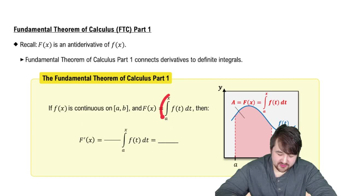
Fundamental Theorem of Calculus Part 1

Calculus of Variations

Calculus of variations is a field of mathematical analysis that deals with optimizing functionals, which are mappings from a set of functions to real numbers. In this context, it helps in determining the optimal shape or path that the pole must take to maximize its length while navigating the corner formed by the two corridors.
Video consigliato:
Percorso guidato
06:11
Fundamental Theorem of Calculus Part 1