

Explain why or why not Determine whether the following statements are true and give an explanation or counterexample. Assume ƒ, ƒ', and ƒ'' are continuous functions for all real numbers.
(a) ∫ ƒ(𝓍) ƒ'(𝓍) d𝓍 = ½ (ƒ(𝓍))² + C.
Guida verificata passo dopo passo
Explain why or why not Determine whether the following statements are true and give an explanation or counterexample. Assume ƒ, ƒ', and ƒ'' are continuous functions for all real numbers.
(a) ∫ ƒ(𝓍) ƒ'(𝓍) d𝓍 = ½ (ƒ(𝓍))² + C.
Average value with a parameter Consider the function ƒ(𝓍) = a𝓍 (1―𝓍) on the interval [0, 1], where a is a positive real number.
(a) Find the average value of ƒ as a function of a .
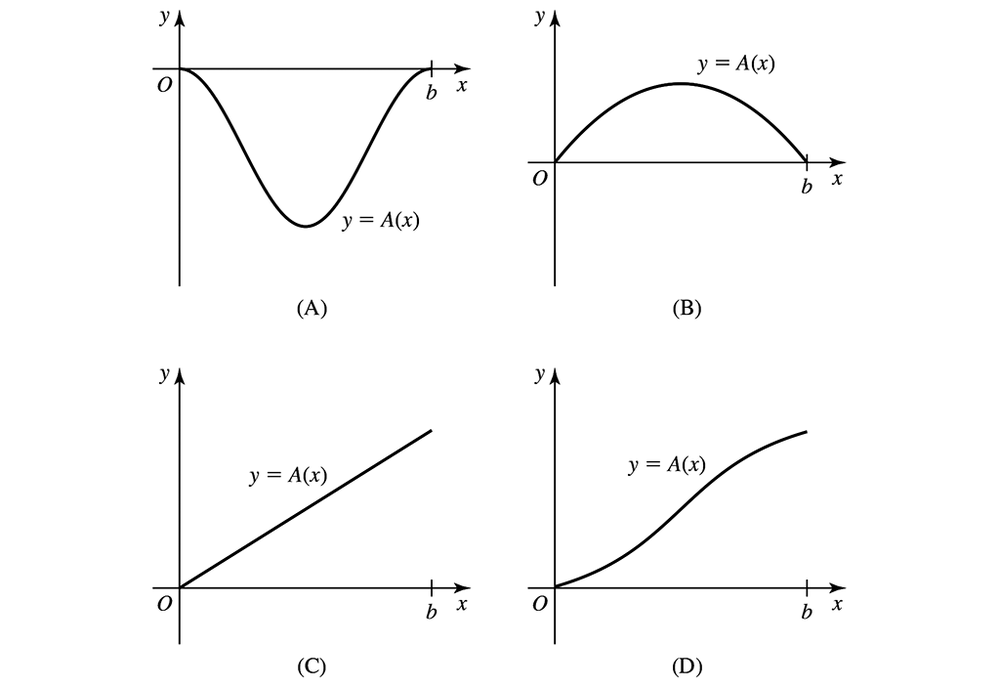
Working with area functions Consider the function ƒ and the points a, b, and c.
(a) Find the area function A (𝓍) = ∫ₐˣ ƒ(t) dt using the Fundamental Theorem.
ƒ(𝓍) = cos 𝓍 ; a = 0 , b = π/2 , c = π
{Use of Tech} Midpoint Riemann sums with a calculator Consider the following definite integrals.
(a) Write the midpoint Riemann sum in sigma notation for an arbitrary value of n.
∫₁⁴ 2√𝓍 d𝓍
Sigma notation Evaluate the following expressions.
(a) 10
∑ κ
κ=1
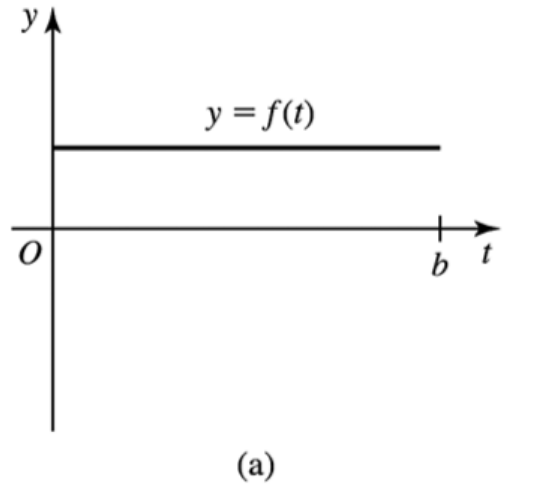
Explain why or why not Determine whether the following statements are true and give an explanation or counterexample.
(a) If ƒ is a constant function on the interval [a,b], then the right and left Riemann sums give the exact value of ∫ₐᵇ ƒ(𝓍) d𝓍, for any positive integer n.