Skip to main content
Financial Accounting
Il mio corso
Impara
Preparazione agli esami
AI Tutor
Guide di studio
Flashcard
Esplora
Prova l'app
Il mio corso
Impara
Preparazione agli esami
AI Tutor
Guide di studio
Flashcard
Esplora
Prova l'app
Indietro
Service Company vs. Merchandising Company definitions
Puoi toccare per girare la carta.
Service Company
Puoi toccare per girare la carta.
👆
Service Company
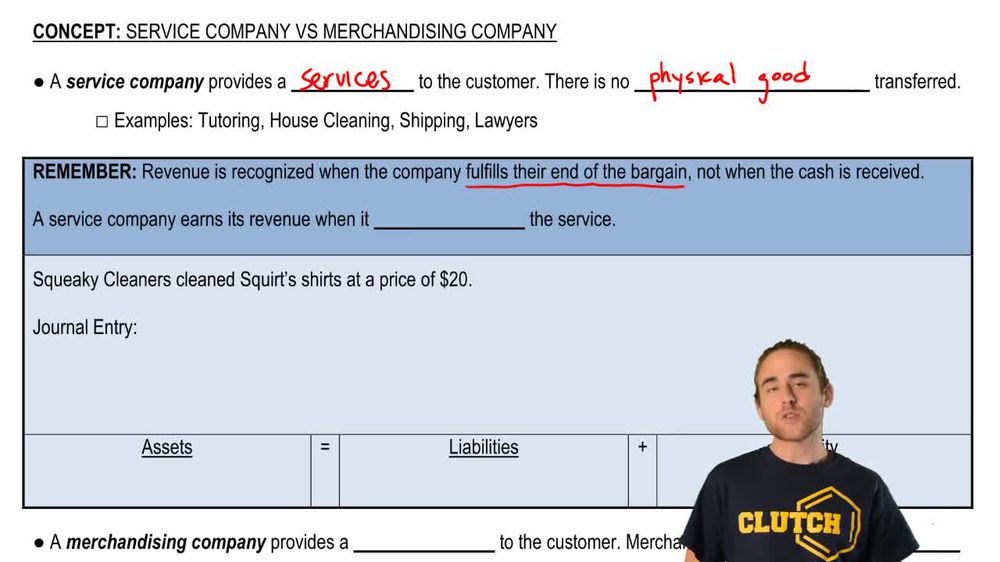
Business model focused on providing intangible services to customers, with revenue recognized upon completion of the service.
Avanzamenti del tracciato
I pulsanti di controllo sono stati cambiati in modalità "navigazione".
1/15
Flashcard correlate
Pratica correlata
Video consigliati
Service Company vs. Merchandising Company quiz #1
Service Company vs. Merchandising Company
28 Termini
Service Company vs. Merchandising Company
4. Merchandising Operations
10 Problemi
Argomento
Net Sales
4. Merchandising Operations
10 Problemi
Argomento
4. Merchandising Operations
14 Argomenti
14 Problemi
Capitolo
VideoThumbView.guidedCourse
07:01
Merchandising Company
2317
views
123
rank
VideoThumbView.guidedCourse
03:43
Service Company
3284
views
78
rank
Termini in questo insieme (15)
Nascondere definizioni
Service Company
Business model focused on providing intangible services to customers, with revenue recognized upon completion of the service.
Merchandising Company
Business that resells tangible goods purchased from suppliers, earning revenue when goods are delivered to customers.
Intangible Service
Non-physical benefit provided to customers, such as tutoring or cleaning, with no transfer of physical goods.
Tangible Good
Physical item transferred from seller to buyer, forming the basis of sales in merchandising companies.
Revenue Recognition Principle
Accounting guideline requiring revenue to be recorded when a company fulfills its performance obligation, not when cash is received.
Journal Entry
Formal accounting record documenting the financial impact of business transactions, affecting accounts like revenue or inventory.
Accounts Receivable
Asset account representing amounts owed by customers for services or goods delivered on credit.
Service Revenue
Income earned from providing services, recorded when the service is completed, regardless of payment timing.
Sales Revenue
Income generated from selling goods, recognized when goods are delivered to the customer.
Cost of Goods Sold
Expense account reflecting the direct cost incurred by a merchandising company to acquire goods sold to customers.
Inventory
Current asset account representing goods held for resale by a merchandising company.
Matching Principle
Accounting concept requiring expenses to be recorded in the same period as the related revenues to accurately reflect profitability.
Asset
Resource owned by a company, such as cash, inventory, or accounts receivable, providing future economic benefit.
Equity
Owner's residual interest in the assets of a company after deducting liabilities, increased by revenues and decreased by expenses.
Expense
Outflow or using up of assets as part of operations, such as cost of goods sold in merchandising companies.
 IndietroIndietro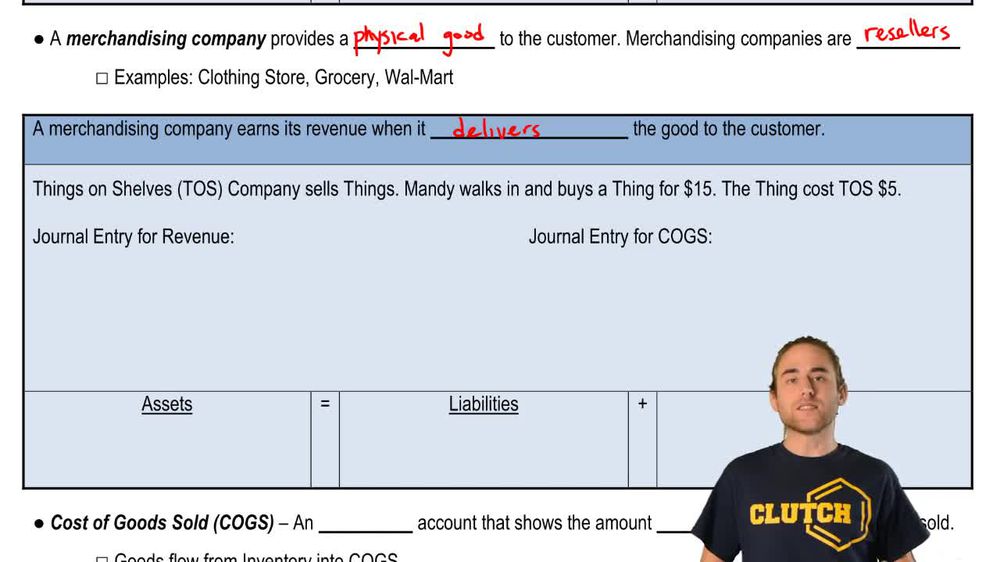
 07:01
07:01