 Indietro
Accounts on the Balance Sheet and Income Statement
 09:57
09:57
Termini in questo insieme (20)
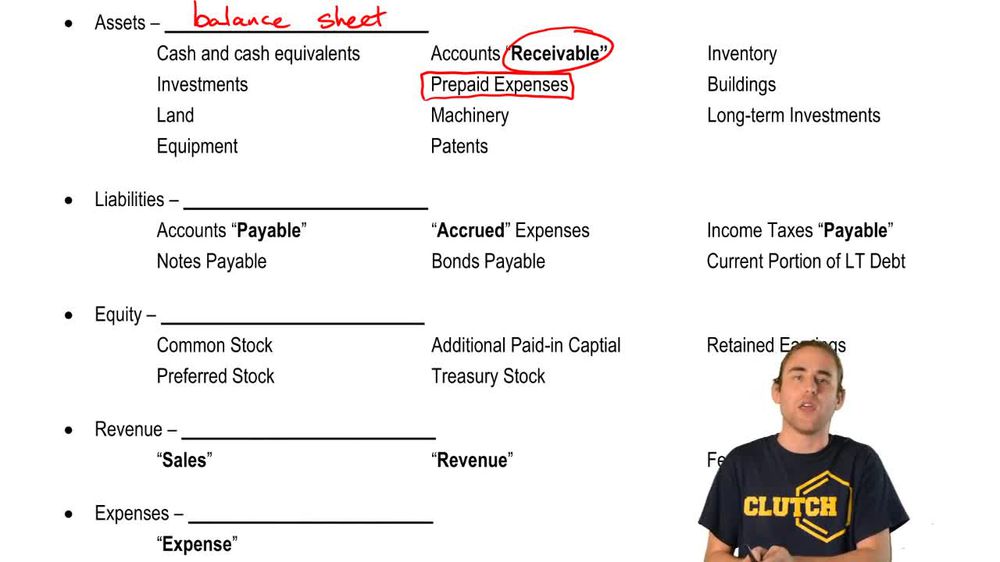
Assets are resources owned by a company that provide future economic benefits, such as cash, inventory, and property.
Liabilities are obligations the company owes to others, like loans, accounts payable, and mortgages.
Owner's equity represents the residual interest in the assets after deducting liabilities; it includes common stock and retained earnings.
Common current assets include cash, accounts receivable, inventory, and prepaid expenses.
Long-term assets are assets held for more than one year, such as property, plant, equipment, and intangible assets.
Typical current liabilities include accounts payable, short-term debt, and accrued expenses.
Long-term liabilities include debts due after one year, such as mortgages and bonds payable.
Revenue is the total amount earned from sales of goods or services before expenses.
Expenses are costs incurred to generate revenue, including cost of goods sold, operating expenses, and interest expense.
Gross profit is revenue minus cost of goods sold, showing profit from core operations before other expenses.
Net income is the profit after all expenses, taxes, and costs have been deducted from total revenue.
Retained earnings are accumulated net income kept in the company rather than paid out as dividends.
Accounts receivable are amounts owed to the company by customers for sales made on credit.
Accounts payable are amounts the company owes to suppliers for purchases made on credit.
Inventory represents goods held for sale in the ordinary course of business.
Depreciation expense allocates the cost of a tangible asset over its useful life.
Operating expenses are costs related to running the business, such as rent, utilities, and salaries.
Interest expense is the cost incurred from borrowing funds.
Prepaid expenses are payments made in advance for goods or services to be received in the future.
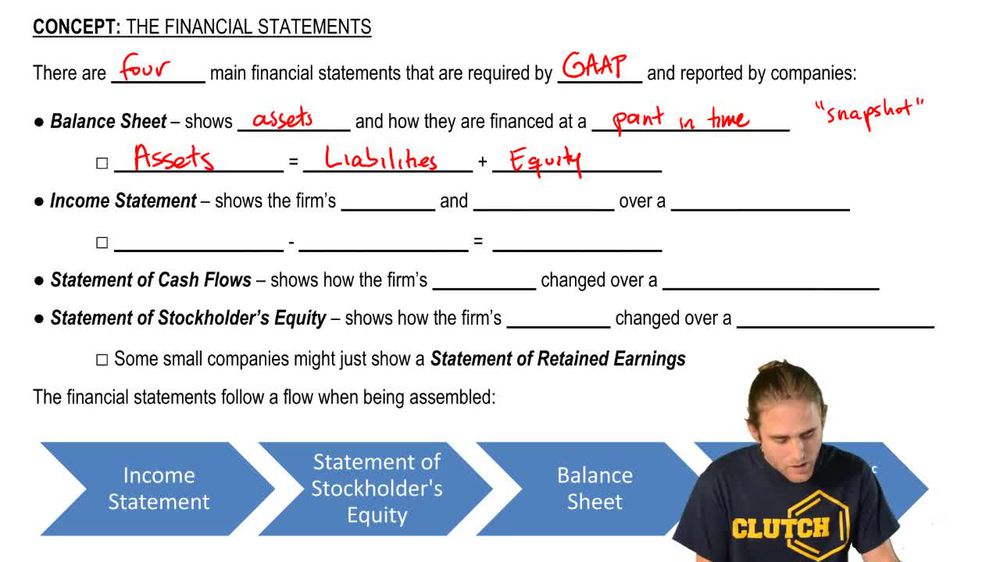
The accounting equation is \(\text{Assets} = \text{Liabilities} + \text{Owner's Equity}\).