Indietro

ACTG 2010 CH1,2

I pulsanti di controllo sono stati cambiati in modalità "navigazione".
1/15
  • What is financial accounting and its role in economic decision-making?

    Financial accounting is the process of recording, summarizing, and reporting a company's financial transactions to outside parties. It provides standardized, reliable data to help investors, lenders, and regulators make informed economic decisions.
  • Who are the main users of financial accounting information?

    Main users are external (investors, lenders, regulators) who use it for investment, loan decisions, and compliance, and internal (managers, executives) who use it for performance analysis, budgeting, and planning.
  • What are the major forms of business organization and their key distinctions?

    Sole proprietorship (one owner, unlimited liability), partnership (two or more owners, shared profits, unlimited liability), and corporation (separate legal entity, limited liability, continuous life, double taxation).
  • What are the three categories of business activities?

    Financing (raising capital like issuing stock or borrowing), investing (buying/selling long-term assets), and operating (daily revenue-generating activities like sales and paying wages).
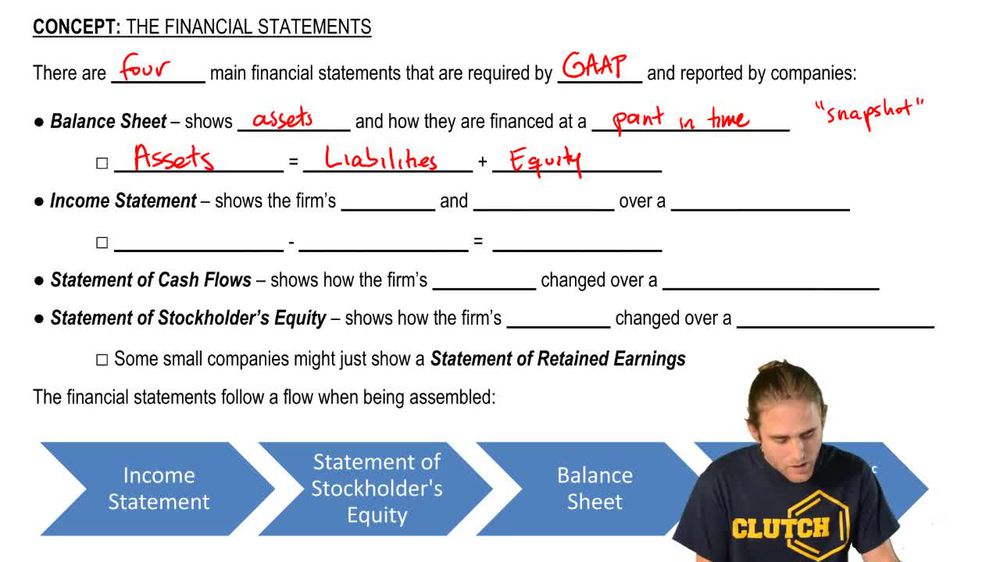
  • What are the four basic financial statements and their purposes?

    Income statement (revenues and expenses to show net income), statement of retained earnings (changes in earnings after dividends), balance sheet (assets, liabilities, equity at a date), statement of cash flows (cash movement).
  • What is the role of notes to the financial statements?

    Notes provide essential details and disclosures that clarify and explain the numbers in the financial statements.
  • Which accounting standards do Canadian companies use?

    Public Canadian companies use IFRS; private companies usually use ASPE but may also use IFRS. IFRS is internationally recognized and used by about 140 countries.
  • What are the qualitative characteristics of useful financial information?

    Relevance (predictive, confirmative, material) and faithful representation (neutral, error-free, complete). Enhancing characteristics include comparability, verifiability, timeliness, and understandability.
  • How does the cost constraint affect financial reporting?

    The benefits of producing and reporting financial statements must outweigh the costs involved for the business.
  • What is the difference between cash basis and accrual basis accounting?

    Cash basis records transactions only when cash is received or paid, which can be manipulated. Accrual basis records transactions when they occur, providing a faithful representation of financial position.
  • What is the accounting equation template approach?

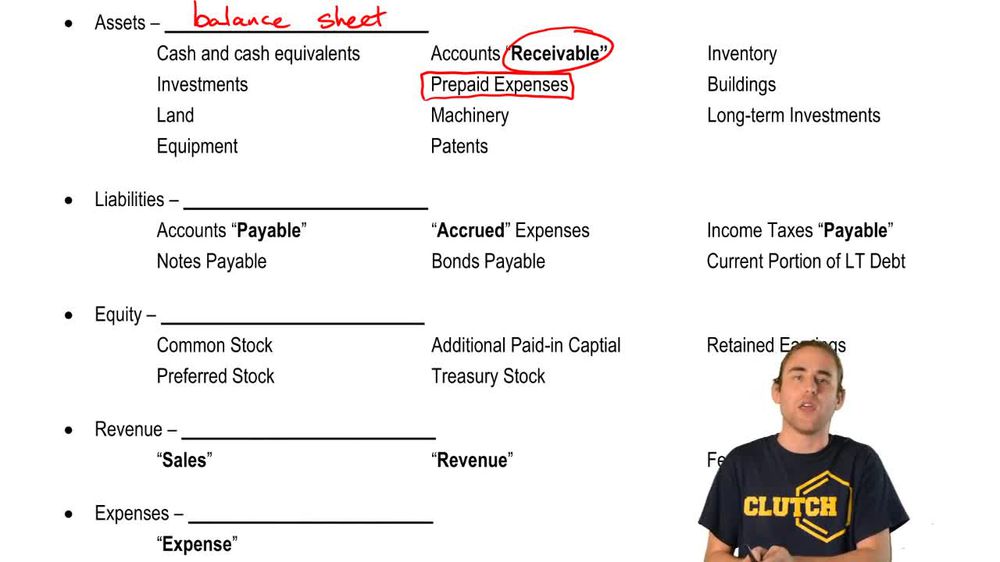
    It organizes accounts with assets on the left and liabilities plus equity on the right, following the equation Assets = Liabilities + Equity, helping small businesses track finances simply.
  • What are the three rules of the accounting equation template approach?

    1. Transactions affect at least two accounts. 2. Left side (assets) must equal right side (liabilities + equity). 3. Retained earnings entries must state if from revenue, expense, or dividend.
  • How do you analyze basic transactions in accounting?

    Ensure both sides of the accounting equation balance, match debits and credits, select correct accounts to increase or decrease, and consider factors like interest on loans.
  • What is the first financial statement to prepare when analyzing transactions?

    The income statement, which reports revenues and expenses to determine net income.
  • What are the three profitability ratios used to assess a company?

    Profit margin, return on equity, and return on assets; these help shareholders decide on investing and compare company performance.