 Indietro
Basic Concepts in General Chemistry
 01:34
01:34

Termini in questo insieme (12)
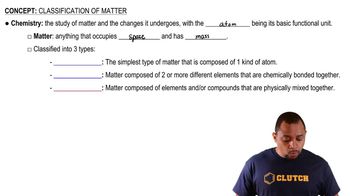
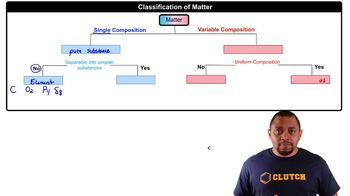
An element is a pure substance consisting of only one type of atom.
A compound is a pure substance made of two or more different elements chemically combined in fixed proportions.
A mixture contains two or more substances physically combined, not chemically bonded.
A homogeneous mixture has a uniform composition throughout and appears as a single phase.
A heterogeneous mixture has visibly different parts or phases.
A physical property can be observed or measured without changing the substance's identity.
A chemical property describes a substance's ability to undergo a chemical change.
A physical change alters the form or appearance of a substance without changing its identity.
A chemical change results in the formation of one or more new substances.
A solid has a fixed shape and volume with particles closely packed in a rigid structure.
A liquid has a fixed volume but takes the shape of its container; particles are close but can move past each other.
A gas has neither fixed shape nor volume and expands to fill its container; particles are far apart and move freely.