 Indietro
Basics of General Chemistry
 01:34
01:34

Termini in questo insieme (20)
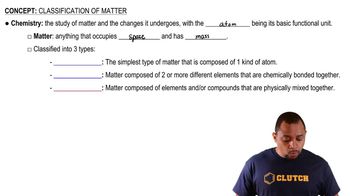
An atom is the smallest unit of an element that retains the chemical properties of that element.
Protons, neutrons, and electrons are the three main subatomic particles in an atom.
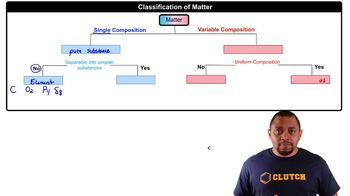
An element is a pure substance made of only one type of atom.
A compound is a substance formed when two or more different elements chemically bond together.
A molecule is two or more atoms chemically bonded together, can be the same or different elements.
The atomic number is the number of protons in an atom's nucleus.
Atomic mass is the weighted average mass of an element's isotopes, measured in atomic mass units (amu).
Isotopes are atoms of the same element with different numbers of neutrons.
A chemical bond is the force that holds atoms together in a compound or molecule.
The two main types are ionic bonds and covalent bonds.
An ionic bond forms when electrons are transferred from one atom to another, creating ions.
A covalent bond forms when atoms share electrons.
The periodic table organizes elements by increasing atomic number and similar chemical properties.
Periods are horizontal rows; groups are vertical columns with elements having similar properties.
A mole is a unit representing \(6.022\times10^{23}\) particles of a substance.
Avogadro's number is \(6.022\times10^{23}\), the number of particles in one mole.
Molar mass is the mass of one mole of a substance, usually in grams per mole (g/mol).
The law of conservation of mass states that mass is neither created nor destroyed in a chemical reaction.
A chemical reaction is a process where substances change into new substances with different properties.
A physical change alters form without changing composition; a chemical change changes the substance's composition.