 Indietro
General Chemistry: Atoms and Elements
 01:20
01:20
Termini in questo insieme (21)
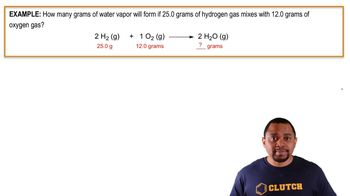
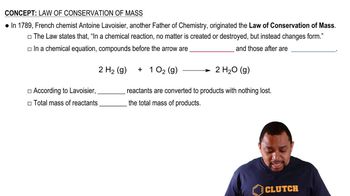
Mass is neither created nor destroyed in a chemical reaction; the total mass of reactants equals the total mass of products.
A chemical compound always contains the same elements in the exact same proportion by mass, regardless of sample size.
When two elements form more than one compound, the masses of one element that combine with a fixed mass of the other are in small whole-number ratios.
Dalton proposed that matter is made of indivisible atoms, atoms of an element are identical, and atoms combine in simple whole-number ratios to form compounds.
Thomson discovered the electron and proposed the plum pudding model where electrons are embedded in a positive sphere.
Rutherford discovered the nucleus by gold foil experiment, showing atoms have a dense positive center with electrons around it.
Millikan measured the charge of the electron using the oil drop experiment, allowing calculation of the electron's mass.
Radioactivity is the spontaneous emission of particles or energy from an unstable atomic nucleus.
Protons (positive charge), neutrons (neutral), and electrons (negative charge).
Isotopes are atoms of the same element with the same number of protons but different numbers of neutrons.
Elements are arranged by increasing atomic number and grouped by similar chemical properties in columns called groups.
Ions are atoms or molecules with a net electric charge due to loss or gain of electrons.
Elements in the same group tend to form ions with the same charge due to similar valence electron configurations.
The weighted average mass of an element's isotopes based on their natural abundance.
A mole is the amount of substance containing exactly \(6.022\times10^{23}\) entities (Avogadro's number).
6.022 × 10²³, the number of particles in one mole of a substance.
The mass of one mole of a substance, usually expressed in grams per mole (g/mol).
Multiply each isotope's mass by its fractional abundance and sum the results.
Protons have a +1 charge and are located in the nucleus of the atom.
Electrons have a -1 charge and are found in the electron cloud surrounding the nucleus.
Neutrons have no charge and contribute to the mass and stability of the nucleus.