What is the difference between an element and a compound?
Elements are pure substances consisting of one type of atom, while compounds are substances formed when two or more elements chemically combine in fixed proportions.
What defines a mixture compared to a compound?
In a mixture, elements or compounds can mix in any proportions. In a compound, elements combine in fixed, definite proportions.
What are the two broad types of chemical bonds?
Chemical bonds are classified as ionic (transfer of electrons between metals and nonmetals) and covalent (sharing of electrons between nonmetals).
How do ionic bonds form?
Ionic bonds form by the transfer of electrons from a metal atom to a nonmetal atom, creating oppositely charged ions that attract each other.
What is a lattice in ionic compounds?
In the solid phase, ionic compounds form a lattice, a regular 3D array of alternating cations and anions.
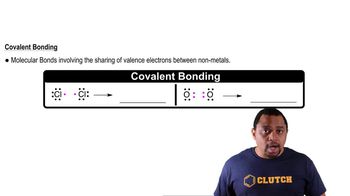
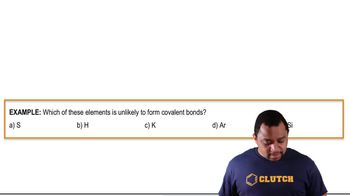
What characterizes covalent bonds?
Covalent bonds involve the sharing of electrons between two or more nonmetal atoms, forming molecules.
What information does a chemical formula provide?
A chemical formula indicates the elements present and the relative number of atoms or ions of each in a compound.
What are the three types of chemical formulas?
The three types are empirical formulas (relative atom ratios), molecular formulas (actual atom counts), and structural formulas (bond connectivity).
How does a structural formula differ from an empirical formula?
A structural formula shows how atoms are bonded and the molecule's geometry, while an empirical formula only shows the simplest ratio of atoms.
What is the difference between atomic and molecular elements?
Atomic elements exist as single atoms (e.g., Na, Ne), while molecular elements exist as molecules of bonded atoms (e.g., O2, N2).
What is the basic unit of an ionic compound?
The basic unit of an ionic compound is the formula unit, the smallest electrically neutral collection of ions.
How do you name type one ionic compounds?
Name the metal cation (with invariant charge) first, followed by the base name of the nonmetal anion with the suffix -ide.
How do you name type two ionic compounds?
For metals with variable charges, specify the metal's charge with a Roman numeral in parentheses after the metal name.
What are polyatomic ions?
Polyatomic ions are charged species composed of covalently bonded atoms acting as a single ion in ionic compounds.
How are oxyanions named when there are two ions in a series?
The ion with more oxygen atoms ends with -ate, and the one with fewer ends with -ite.
What are hydrates in ionic compounds?
Hydrates are ionic compounds that contain a specific number of water molecules associated with each formula unit.
How are molecular compounds named?
Molecular compounds use prefixes to indicate the number of atoms of each element, with the element having the smaller group number named first.
What defines an acid in chemistry?
Acids are molecular compounds that release hydrogen ions (H+) when dissolved in water.
How are binary acids named?
Use the prefix hydro-, the base name of the nonmetal, add -ic, and then the word acid.
How are oxyacids named?
If the polyatomic ion ends in -ate, change to -ic; if it ends in -ite, change to -ous, then add acid.
What is molar mass?
Molar mass is the mass in grams of one mole of molecules or formula units, numerically equal to the formula mass in amu.
How can molar mass and Avogadro's number be used together?
Molar mass converts mass to moles, and Avogadro's number converts moles to number of molecules or atoms.
What is the empirical formula?
The empirical formula is the simplest whole-number ratio of atoms in a compound, determined from elemental analysis.
How do you find an empirical formula from percent composition?
Convert percent to grams, grams to moles, then divide all mole values by the smallest mole value to get whole-number ratios.
How is the molecular formula related to the empirical formula?
The molecular formula is a whole-number multiple of the empirical formula, determined using the compound's molar mass.
What is combustion analysis used for?
Combustion analysis determines the elemental composition of organic compounds by burning a known mass and measuring product masses.
What are hydrocarbons?
Hydrocarbons are organic compounds composed only of carbon and hydrogen, including alkanes, alkenes, and alkynes.
What is a functional group in organic chemistry?
A functional group is a specific atom or group of atoms that imparts characteristic chemical properties to an organic compound.
 Indietro
 01:04
01:04