Domanda del libro di testo
Label each of the following as either a physical process or a chemical process: (a) crushing a metal can (b) production of urine in the kidneys
699
views

 Brown 14th EditionCh.1 - Introduction: Matter, Energy, and MeasurementProblema 21c,d,e
 Guida verificata passo dopo passo
 02:54
02:54
 01:34
01:34 04:29
04:29Label each of the following as either a physical process or a chemical process: (a) crushing a metal can (b) production of urine in the kidneys
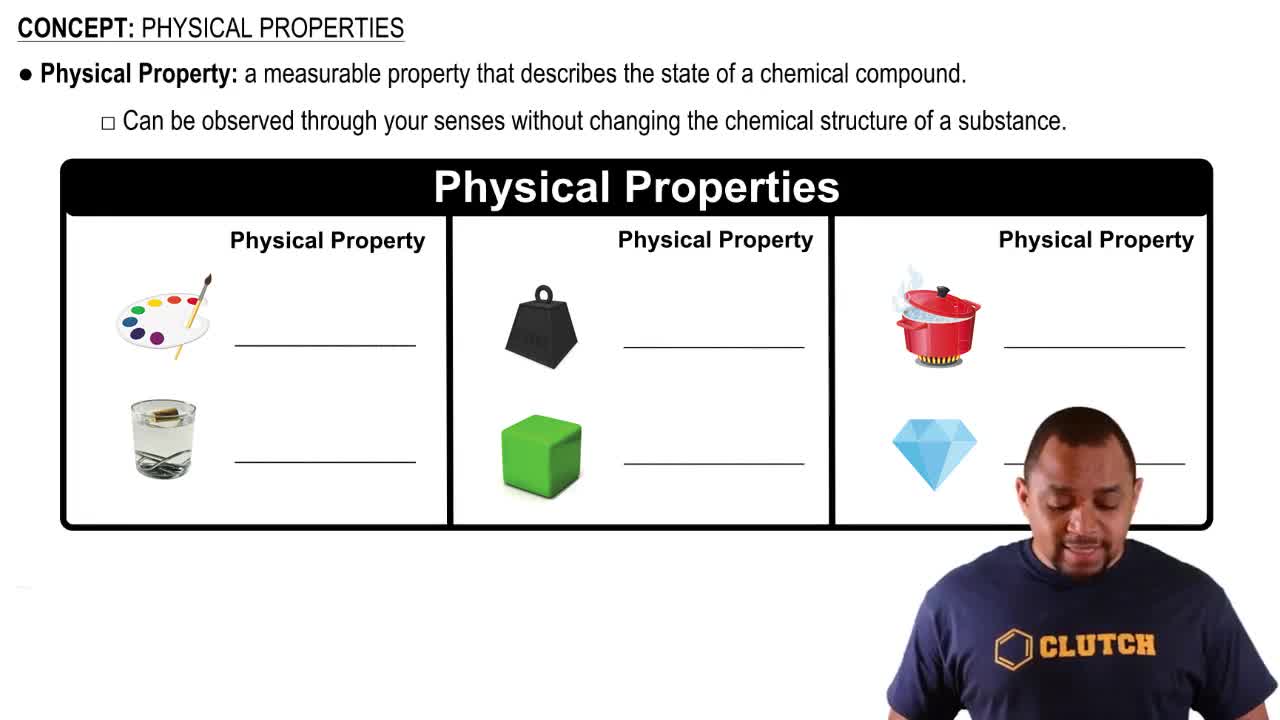
(b) Which properties of zinc can you describe from the photo? Are these physical or chemical properties?
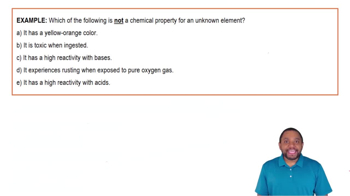
A match is lit and held under a cold piece of metal. The following observations are made: (a) The match burns. (b) The metal gets warmer. (c) Water condenses on the metal. (d) Soot (carbon) is deposited on the metal. Which of these occurrences are due to physical changes, and which are due to chemical changes?
(a) Read the following description of the element zinc and indicate which are physical properties and which are chemical properties. Zinc melts at 420 °C. When zinc granules are added to dilute sulfuric acid, hydrogen is given off and the metal dissolves. Zinc has a hardness on the Mohs scale of 2.5 and a density of 7.13 g/cm3 at 25 °C. It reacts slowly with oxygen gas at elevated temperatures to form zinc oxide, ZnO.