Ch.13 - Properties of Solutions
Brown - Chemistry: The Central Science 14th Edition
Brown14th EditionChemistry: The Central ScienceISBN: 9780134414232Non è quello che usi tu?Cambia libro di testo
Capitolo 13, Problema 28

Oil and water are immiscible. Which is the most likely reason? (a) Oil molecules are denser than water. (b) Oil molecules are composed mostly of carbon and hydrogen. (c) Oil molecules have higher molar masses than water. (d) Oil molecules have higher vapor pressures than water. (e) Oil molecules have higher boiling points than water.

Guida verificata passo dopo passo
1
Understand the concept of immiscibility: Immiscibility refers to the inability of two substances to mix and form a homogeneous solution. In the case of oil and water, they do not mix because of differences in their molecular properties.
Consider the polarity of molecules: Water is a polar molecule, meaning it has a partial positive charge on one side and a partial negative charge on the other. Oil, on the other hand, is nonpolar, primarily composed of carbon and hydrogen atoms, which do not have significant charge separation.
Apply the 'like dissolves like' principle: This principle states that polar substances tend to dissolve in polar solvents, and nonpolar substances dissolve in nonpolar solvents. Since oil is nonpolar and water is polar, they do not mix well.
Evaluate the options: (a) Density, (c) molar mass, (d) vapor pressure, and (e) boiling point are not directly related to the immiscibility of oil and water. The key factor is the molecular composition and polarity, which is addressed in option (b).
Conclude that the most likely reason for the immiscibility of oil and water is option (b): Oil molecules are composed mostly of carbon and hydrogen, making them nonpolar and unable to mix with polar water molecules.

Risposta video verificata per un problema simile:

Questa soluzione video è stata consigliata dai nostri tutor come utile per risolvere questo problema.
Durata del video:
1m

Concetti chiave

Ecco i concetti essenziali che devi comprendere per rispondere correttamente alla domanda.

Polarity

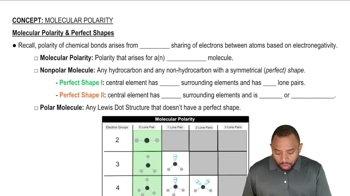
Polarity refers to the distribution of electrical charge over the atoms in a molecule. Water is a polar molecule, meaning it has a partial positive charge on one side and a partial negative charge on the other, allowing it to form hydrogen bonds. In contrast, oil molecules are nonpolar, lacking significant charge separation, which prevents them from interacting favorably with water molecules, leading to immiscibility.
Video consigliato:
Percorso guidato
02:38
Molecular Polarity

Hydrophobic and Hydrophilic Interactions

Hydrophobic interactions occur between nonpolar substances, like oil, which do not mix well with polar substances, such as water. Hydrophilic substances, on the other hand, are attracted to water. The inability of oil to form hydrogen bonds with water molecules results in the separation of the two liquids, as oil molecules prefer to associate with each other rather than with water.
Video consigliato:
Percorso guidato
03:01
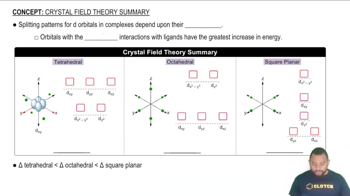
The greatest ligand-orbital interactions result in the greatest increase in energy.

Density and Miscibility

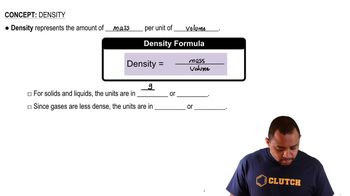
Density is a measure of mass per unit volume and can influence the behavior of liquids. While oil is generally less dense than water, which causes it to float, the primary reason for their immiscibility is not density but rather the differences in polarity. Miscibility is determined by the ability of substances to mix at a molecular level, which is hindered in this case due to the nonpolar nature of oil.
Video consigliato:
Percorso guidato
01:56
Density Concepts