Ch.14 - Chemical Kinetics
Brown - Chemistry: The Central Science 14th Edition
Brown14th EditionChemistry: The Central ScienceISBN: 9780134414232Non è quello che usi tu?Cambia libro di testo
Capitolo 14, Problema 18a

(a) What are the units usually used to express the rates of reactions occurring in solution?

Guida verificata passo dopo passo
1
Identify the type of reaction: Since the question specifies reactions occurring in solution, we are dealing with reactions where reactants are dissolved in a solvent.
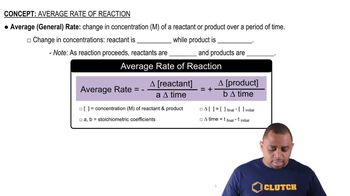
Understand the concept of reaction rate: Reaction rate refers to the speed at which reactants are converted into products. It is a measure of the change in concentration of reactants or products per unit time.
Recognize common units of concentration: In solutions, concentration is typically expressed in moles per liter (Molarity, M).
Determine the appropriate unit for time: Time is generally measured in seconds (s) in the context of reaction rates.
Combine the units of concentration and time: The rate of a reaction in solution is usually expressed in terms of a change in concentration over a change in time, leading to units of Molarity per second (M/s).

Risposta video verificata per un problema simile:

Questa soluzione video è stata consigliata dai nostri tutor come utile per risolvere questo problema.
Durata del video:
2m

Concetti chiave

Ecco i concetti essenziali che devi comprendere per rispondere correttamente alla domanda.

Reaction Rate

The reaction rate is a measure of how quickly reactants are converted into products in a chemical reaction. It is typically expressed as the change in concentration of a reactant or product per unit time, allowing chemists to quantify the speed of the reaction under specific conditions.
Video consigliato:
Percorso guidato
02:03
Average Rate of Reaction

Concentration Units

Concentration is a key factor in determining reaction rates and is commonly expressed in units such as molarity (M), which is moles of solute per liter of solution. Understanding these units is essential for calculating how changes in concentration affect the rate of a reaction.
Video consigliato:

Time Units

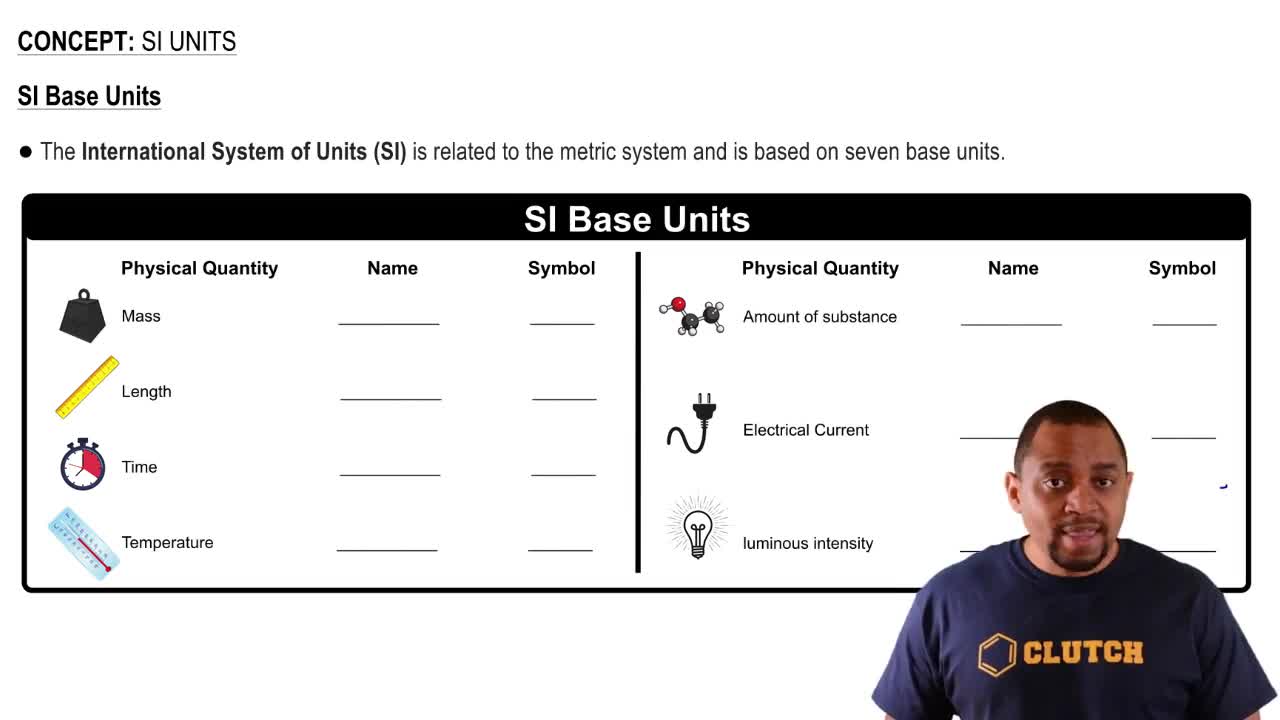
Time is another critical component in expressing reaction rates, typically measured in seconds (s), minutes (min), or hours (h). The choice of time unit can influence the interpretation of the reaction rate, especially in fast or slow reactions, making it important to maintain consistency in units when comparing rates.
Video consigliato: