
Ch.14 - Chemical Kinetics
Brown - Chemistry: The Central Science 14th Edition
Brown14th EditionChemistry: The Central ScienceISBN: 9780134414232Non è quello che usi tu?Cambia libro di testo
Capitolo 14, Problema 58b

Indicate whether each statement is true or false. (b) Exothermic reactions are faster than endothermic reactions.

Guida verificata passo dopo passo
1
1. Understand the terms: An exothermic reaction is a chemical reaction that releases energy by light or heat. It is the opposite of an endothermic reaction, which absorbs energy in the form of heat.
2. Understand the statement: The statement is suggesting that exothermic reactions are always faster than endothermic reactions.
3. Analyze the statement: The speed of a reaction (reaction rate) is determined by factors such as temperature, concentration of reactants, presence of a catalyst, and surface area of reactants. It is not directly related to whether the reaction is exothermic or endothermic.
4. Conclusion: Therefore, the statement 'Exothermic reactions are faster than endothermic reactions' is false. The energy change (exothermic or endothermic) does not determine the speed of the reaction.

Risposta video verificata per un problema simile:

Questa soluzione video è stata consigliata dai nostri tutor come utile per risolvere questo problema.
Durata del video:
2m

Concetti chiave

Ecco i concetti essenziali che devi comprendere per rispondere correttamente alla domanda.

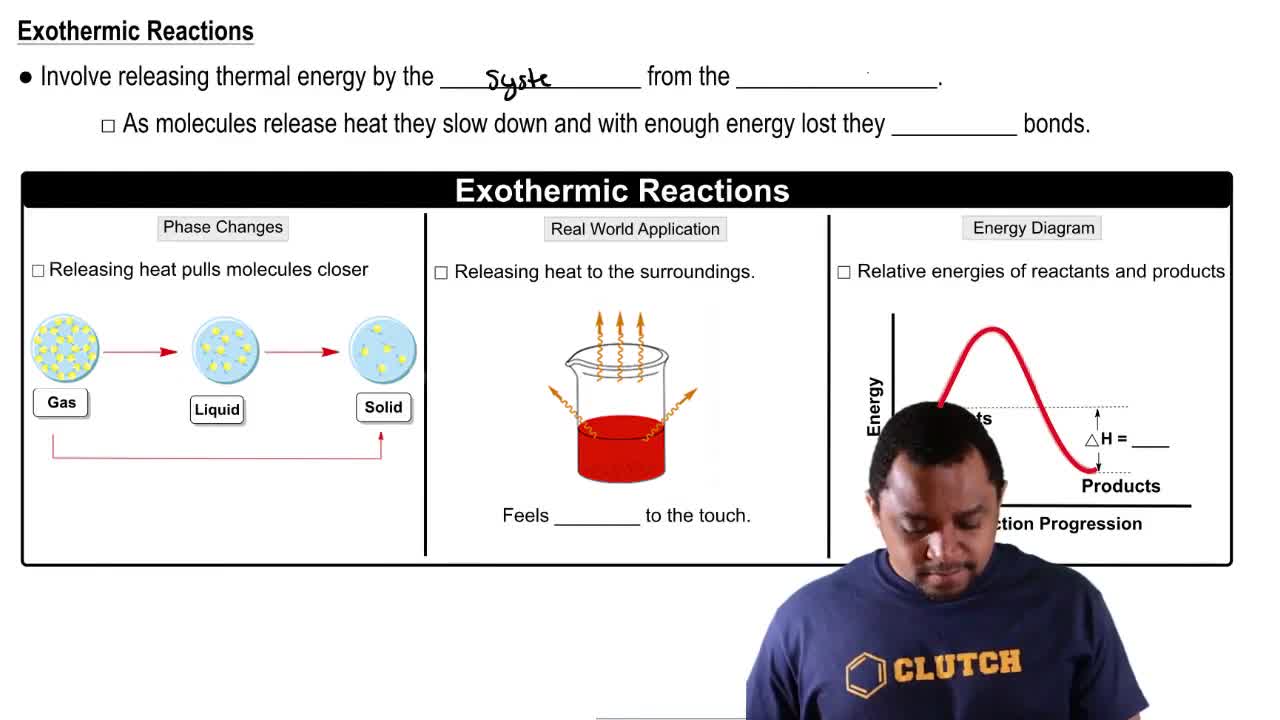
Exothermic Reactions

Exothermic reactions are chemical processes that release energy, usually in the form of heat, to their surroundings. This release of energy often results in an increase in temperature of the surrounding environment. Common examples include combustion reactions, such as burning wood or fossil fuels.
Video consigliato:
Percorso guidato
02:38
Endothermic & Exothermic Reactions

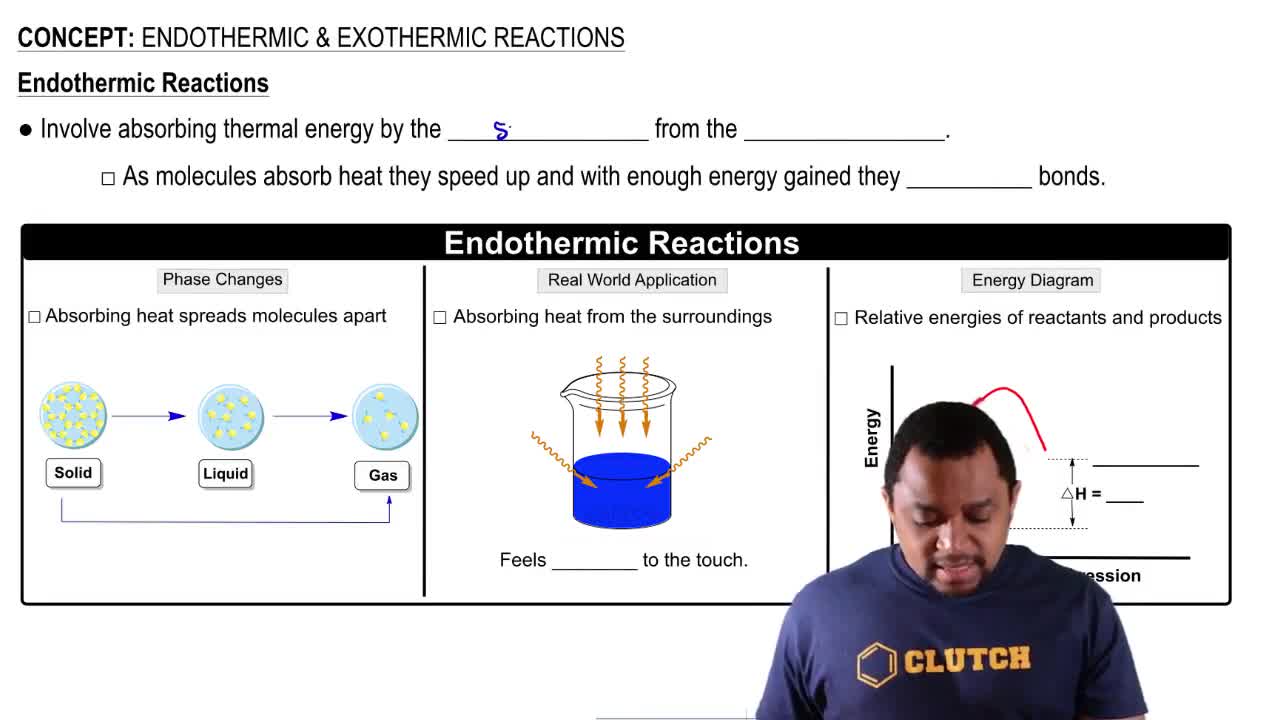
Endothermic Reactions

Endothermic reactions absorb energy from their surroundings, leading to a decrease in temperature of the environment. These reactions require an input of energy to proceed, which can come from heat, light, or electricity. Photosynthesis in plants is a classic example of an endothermic process.
Video consigliato:
Percorso guidato
02:30
Endothermic & Exothermic Reactions

Reaction Rates

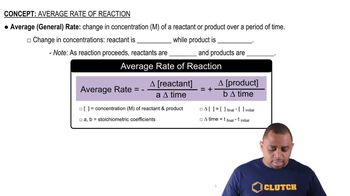
The rate of a chemical reaction refers to how quickly reactants are converted into products. Factors influencing reaction rates include temperature, concentration, surface area, and the presence of catalysts. While exothermic reactions may release energy quickly, this does not inherently mean they are faster than endothermic reactions, as reaction rates depend on various conditions.
Video consigliato:
Percorso guidato
02:03
Average Rate of Reaction