

Ch.20 - Electrochemistry
Brown - Chemistry: The Central Science 14th Edition
Brown14th EditionChemistry: The Central ScienceISBN: 9780134414232Non è quello che usi tu?Cambia libro di testo
Capitolo 20, Problema 96

A mixture of copper and gold metals that is subjected to electrorefining contains tellurium as an impurity. The standard reduction potential between tellurium and its lowest common oxidation state, Te4+, is Te4+1aq2 + 4 e- ¡ Te1s2 E°red = 0.57 V Given this information, describe the probable fate of tellurium impurities during electrorefining. Do the impurities fall to the bottom of the refining bath, unchanged, as copper is oxidized, or do they go into solution as ions? If they go into solution, do they plate out on the cathode?

Guida verificata passo dopo passo
1
Identify the process of electrorefining, which involves the oxidation of the impure metal at the anode and the reduction of the pure metal at the cathode.
Consider the standard reduction potential of tellurium (Te) and compare it with the standard reduction potentials of copper (Cu) and gold (Au).
Recognize that during electrorefining, metals with higher reduction potentials than the metal being refined will remain in solution, while those with lower reduction potentials will not be reduced at the cathode.
Since the standard reduction potential of Te (0.57 V) is lower than that of Cu (0.34 V) and Au (1.50 V), Te is less likely to be reduced at the cathode compared to Cu and Au.
Conclude that tellurium impurities are likely to remain in solution as ions and do not plate out on the cathode, while copper and gold are selectively deposited.

Risposta video verificata per un problema simile:

Questa soluzione video è stata consigliata dai nostri tutor come utile per risolvere questo problema.
Durata del video:
2m

Concetti chiave

Ecco i concetti essenziali che devi comprendere per rispondere correttamente alla domanda.

Electrorefining Process

Electrorefining is a method used to purify metals by using electrolysis. In this process, an impure metal is made the anode, and pure metal is deposited at the cathode. The impurities, depending on their solubility and electrochemical properties, can either remain in the solution or settle at the bottom. Understanding this process is crucial to predicting the behavior of impurities like tellurium during electrorefining.
Video consigliato:
Percorso guidato
04:20
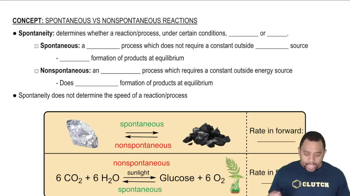
Spontaneity of Processes

Standard Reduction Potential

Standard reduction potential (E°red) is a measure of the tendency of a chemical species to gain electrons and be reduced. A higher E°red value indicates a greater likelihood of reduction occurring. In the context of tellurium, the given E°red of 0.57 V suggests that Te4+ ions can be reduced to solid tellurium, influencing whether tellurium will remain in solution or deposit on the cathode during electrorefining.
Video consigliato:
Percorso guidato
01:10
Standard Reduction Potentials

Behavior of Impurities in Electrolytic Solutions

The behavior of impurities in electrolytic solutions is determined by their solubility and electrochemical properties. Impurities can either dissolve as ions or precipitate out depending on their reduction potentials and interactions with the electrolyte. In the case of tellurium, its ability to exist as Te4+ ions means it may go into solution during electrorefining, potentially leading to its deposition on the cathode if conditions favor its reduction.
Video consigliato:
Percorso guidato
02:50
Electrolytes and Strong Acids