Domanda del libro di testo
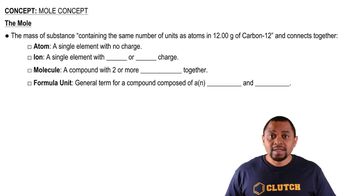
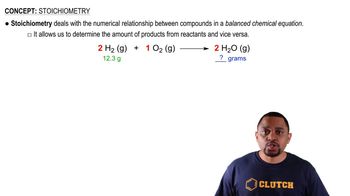
(a) Write 'true' or 'false' for each statement. (b) A mole of water has a mass of 18.0 g.
670
views

 Brown 14th EditionCh.3 - Chemical Reactions and Reaction StoichiometryProblema 29
 Guida verificata passo dopo passo
 01:25
01:25
 01:16
01:16(a) Write 'true' or 'false' for each statement. (b) A mole of water has a mass of 18.0 g.
(a) Write 'true' or 'false' for each statement. (a) A mole of horses contain a mole of horse legs.
Calculate the percentage of carbon by mass in each of the compounds represented by the following models: (a)
Calculate the percentage by mass of the indicated element in the following compounds: (f) carbon in sucrose, C12H22O11, the compound that is responsible for the sweet taste of table sugar.
Based on the following structural formulas, calculate the percentage of carbon by mass present in each compound: (a) Benzaldehyde (almond fragrance) (b) Vanillin (vanilla flavor) c) Isopentyl acetate (banana flavor)
(a) Write “true” or “false” for each statement. (c) The mass of 1 ammonia molecule is 17.0 g.