Ch.5 - Thermochemistry
Brown - Chemistry: The Central Science 14th Edition
Brown14th EditionChemistry: The Central ScienceISBN: 9780134414232Non è quello che usi tu?Cambia libro di testo
Capitolo 5, Problema 91

According to its nutrition label, the same meal also contains 140 mg of potassium ions. Do you think the potassium contributes to the caloric content of the food?

Guida verificata passo dopo passo
1
Understand the role of potassium ions in the body: Potassium ions (K⁺) are essential electrolytes that help in various physiological functions such as nerve transmission and muscle contraction, but they do not provide energy or calories.
Identify what contributes to caloric content: Calories in food are primarily derived from macronutrients such as carbohydrates, proteins, and fats. These macronutrients are metabolized by the body to release energy.
Analyze the chemical nature of potassium: Potassium is a mineral and an element, not a macronutrient. It does not undergo metabolic processes that release energy in the form of calories.
Consider the nutritional label context: The presence of potassium on a nutritional label is to inform about its mineral content for health benefits, not for its caloric contribution.
Conclude based on the above analysis: Since potassium ions do not provide energy, they do not contribute to the caloric content of the food.

Concetti chiave

Ecco i concetti essenziali che devi comprendere per rispondere correttamente alla domanda.

Potassium Ions and Caloric Content

Potassium ions (K+) are essential electrolytes in the body, but they do not contribute to the caloric content of food. Calories are derived from macronutrients such as carbohydrates, proteins, and fats, which provide energy when metabolized. Since potassium is a mineral and does not provide energy, it does not add to the caloric value of the meal.
Video consigliato:

Nutrition Labels

Nutrition labels provide detailed information about the contents of food products, including macronutrients, micronutrients, and their respective amounts. They help consumers understand the nutritional value of food, including calories, fats, carbohydrates, proteins, vitamins, and minerals. The presence of potassium on a label indicates its importance for health but does not imply any caloric contribution.
Video consigliato:
Percorso guidato
01:14
Nature of Energy

Electrolytes and Their Role in the Body

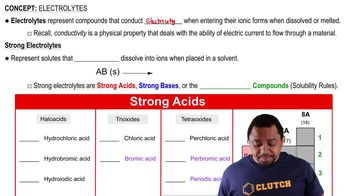
Electrolytes, such as potassium, sodium, and chloride, are ions that help regulate various physiological functions, including fluid balance, nerve transmission, and muscle contraction. While they are crucial for maintaining health, they do not provide energy or calories. Understanding the role of electrolytes is important for recognizing their significance in nutrition without confusing them with energy-providing nutrients.
Video consigliato:
Percorso guidato
02:50
Electrolytes and Strong Acids