
Domanda del libro di testo
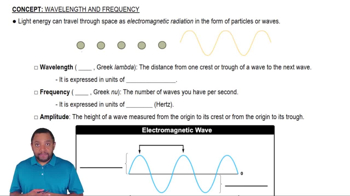
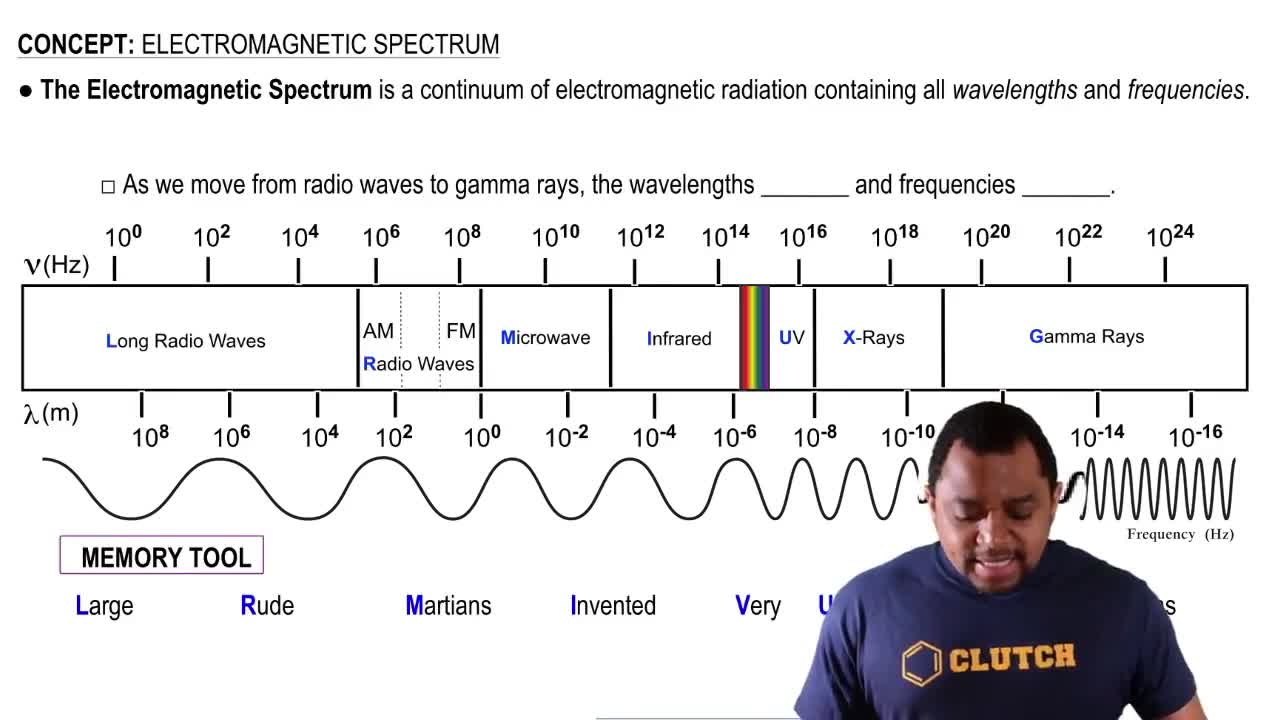
Arrange the following kinds of electromagnetic radiation in order of increasing wavelength: infrared, green light, red light, radio waves, X rays, ultraviolet light.
2457
views

 Guida verificata passo dopo passo
 2:58
2:58
 02:53
02:53 01:11
01:11Arrange the following kinds of electromagnetic radiation in order of increasing wavelength: infrared, green light, red light, radio waves, X rays, ultraviolet light.
Label each of the following statements as true or false. For those that are false, correct the statement. (a) Visible light is a form of electromagnetic radiation.
Determine which of the following statements are false and correct them. Determine which of the following statements are false and correct them. (a) The frequency of radiation increases as the wavelength increases. (b) Electromagnetic radiation travels through a vacuum at a constant speed, regardless of wavelength. (c) Infrared light has higher frequencies than visible light. (d) The glow from a fireplace, the energy within a microwave oven, and a foghorn blast are all forms of electromagnetic radiation.
Label each of the following statements as true or false. For those that are false, correct the statement. (b) Ultraviolet light has longer wavelengths than visible light.