Ch.1 - Introduction: Matter, Energy, and Measurement
Brown - Chemistry: The Central Science 15th Edition
Brown15th EditionChemistry: The Central ScienceISBN: 9780137542970Non è quello che usi tu?Cambia libro di testo
Capitolo 1, Problema 62a

(a) If an electric car is capable of going 225 km on a single charge, how many charges will it need to travel from Seattle, Washington, to San Diego, California, a distance of 1257 mi, assuming that the trip begins with a full charge?

Guida verificata passo dopo passo
1
Convert the distance from miles to kilometers using the conversion factor: 1 mile = 1.60934 kilometers.
Calculate the total distance in kilometers by multiplying 1257 miles by the conversion factor.
Determine how many full charges are needed by dividing the total distance in kilometers by the distance the car can travel on a single charge (225 km).
Since the number of charges must be a whole number, round up to the nearest whole number if necessary.
The result will give you the total number of charges needed for the trip.

Risposta video verificata per un problema simile:

Questa soluzione video è stata consigliata dai nostri tutor come utile per risolvere questo problema.
Durata del video:
1m

Concetti chiave

Ecco i concetti essenziali che devi comprendere per rispondere correttamente alla domanda.

Unit Conversion

Unit conversion is the process of converting a quantity expressed in one unit to another unit. In this question, the distance from Seattle to San Diego is given in miles, while the electric car's range is in kilometers. To solve the problem, it is essential to convert miles to kilometers using the conversion factor that 1 mile is approximately 1.60934 kilometers.
Video consigliato:
Percorso guidato
01:56
Conversion Factors

Distance and Range Calculation

Understanding the relationship between distance, range, and the number of charges is crucial. The range of the electric car indicates how far it can travel on a single charge. By dividing the total distance of the trip by the car's range, one can determine how many full charges are needed to complete the journey, accounting for the initial full charge.
Video consigliato:
Percorso guidato
02:47
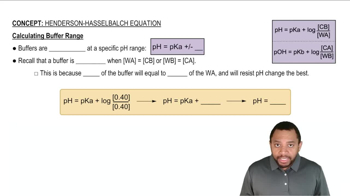
Buffer Range Calculation

Rounding Up for Practicality

In practical scenarios, when calculating the number of charges needed, it is important to round up to the nearest whole number. This is because even if the calculation suggests a fraction of a charge, the car cannot take a partial charge; thus, any remaining distance after the last full charge would require an additional charge to complete the trip.
Video consigliato:
Percorso guidato
02:09
Total Pressure Example