
Domanda del libro di testo
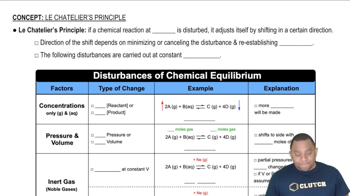
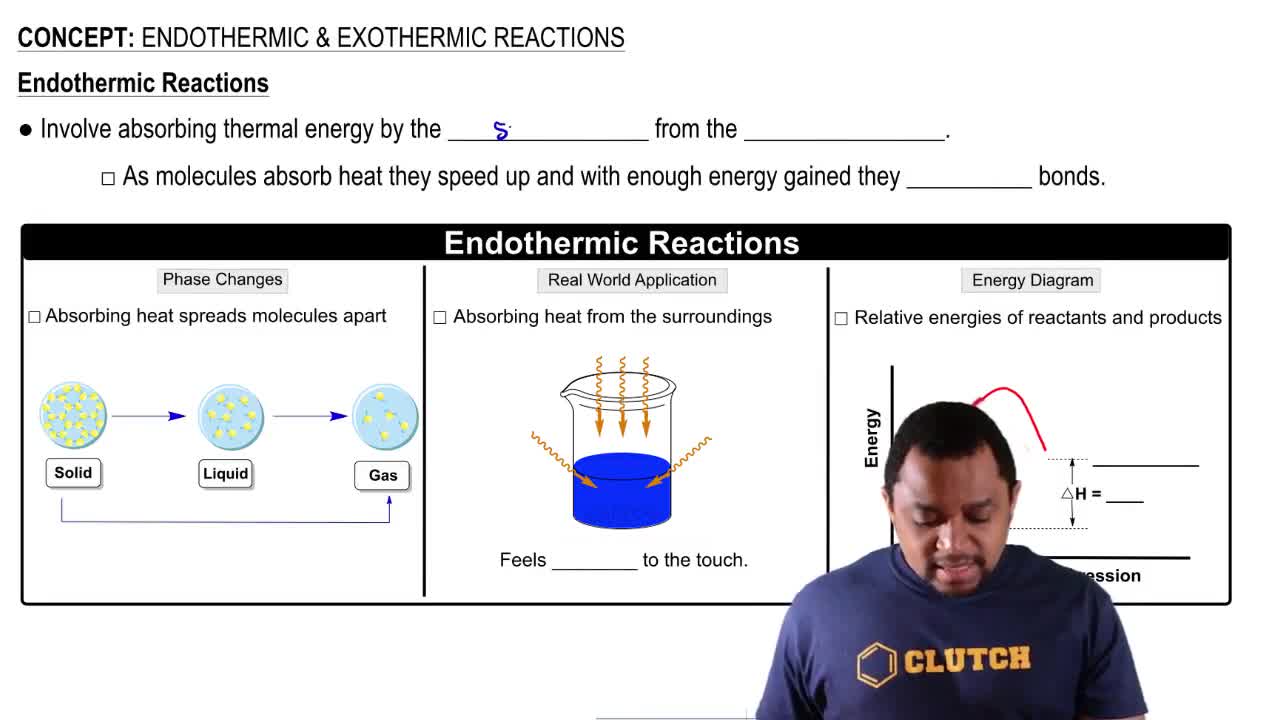
(a) Is the dissociation of fluorine molecules into atomic fluorine, F2(𝑔) ⇌ 2 F(𝑔), an exothermic or endothermic process?
711
views

 Guida verificata passo dopo passo
 07:32
07:32
 02:30
02:30 01:14
01:14(a) Is the dissociation of fluorine molecules into atomic fluorine, F2(𝑔) ⇌ 2 F(𝑔), an exothermic or endothermic process?
Methanol (CH3OH) can be made by the reaction of CO with H2: CO(𝑔) + 2 H2(𝑔) ⇌ CH3OH(𝑔) (a) Use thermochemical data in Appendix C to calculate ΔH° for this reaction.
Consider the following equilibrium between oxides of nitrogen 3 NO(g) ⇌ NO2(g) + N2O(g) (a) At constant temperature, would a change in the volume of the container affect the fraction of products in the equilibrium mixture?
Ozone, O3, decomposes to molecular oxygen in the stratosphere according to the reaction 2 O3(𝑔) ⟶ 3 O2(𝑔). Would increasing the pressure by decreasing the size of the reaction vessel favor the formation of ozone or of oxygen?
Methanol (CH3OH) can be made by the reaction of CO with H2: CO(𝑔) + 2 H2(𝑔) ⇌ CH3OH(𝑔) (c) To maximize the equilibrium yield of methanol, would you use a high or low pressure?