Ch.20 - Electrochemistry
Brown - Chemistry: The Central Science 15th Edition
Brown15th EditionChemistry: The Central ScienceISBN: 9780137542970Non è quello che usi tu?Cambia libro di testo
Capitolo 20, Problema 9

(a) What is an electrolytic cell? (b) The negative terminal of a voltage source is connected to an electrode of an electrolytic cell. Is the electrode the anode or the cathode of the cell? Explain.

Guida verificata passo dopo passo
1
Step 1: Understand the concept of an electrolytic cell. An electrolytic cell is a type of electrochemical cell that uses electrical energy to drive a non-spontaneous chemical reaction. It consists of two electrodes (anode and cathode) immersed in an electrolyte solution.
Step 2: Identify the role of the electrodes in an electrolytic cell. In an electrolytic cell, the anode is the electrode where oxidation occurs, and the cathode is the electrode where reduction occurs.
Step 3: Determine the connection of the voltage source. In an electrolytic cell, the negative terminal of the voltage source is connected to the cathode, and the positive terminal is connected to the anode.
Step 4: Explain the reasoning. The negative terminal of the voltage source provides electrons, which flow to the cathode, causing reduction to occur at the cathode. Therefore, the electrode connected to the negative terminal is the cathode.
Step 5: Summarize the findings. In an electrolytic cell, the electrode connected to the negative terminal of the voltage source is the cathode, where reduction takes place.

Concetti chiave

Ecco i concetti essenziali che devi comprendere per rispondere correttamente alla domanda.

Electrolytic Cell

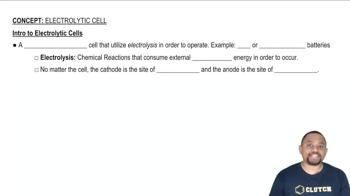
An electrolytic cell is a type of electrochemical cell that uses an external voltage source to drive a non-spontaneous chemical reaction. In this cell, electrical energy is converted into chemical energy, facilitating processes such as electrolysis. The cell consists of two electrodes immersed in an electrolyte solution, where oxidation occurs at the anode and reduction occurs at the cathode.
Video consigliato:
Percorso guidato
01:21
The Electrolytic Cell

Electrode Designation

In an electrolytic cell, the electrodes are designated as anode and cathode based on the direction of electron flow. The anode is the electrode where oxidation occurs, and it is connected to the positive terminal of the voltage source. Conversely, the cathode is where reduction takes place and is connected to the negative terminal, attracting cations from the electrolyte.
Video consigliato:
Percorso guidato
04:44
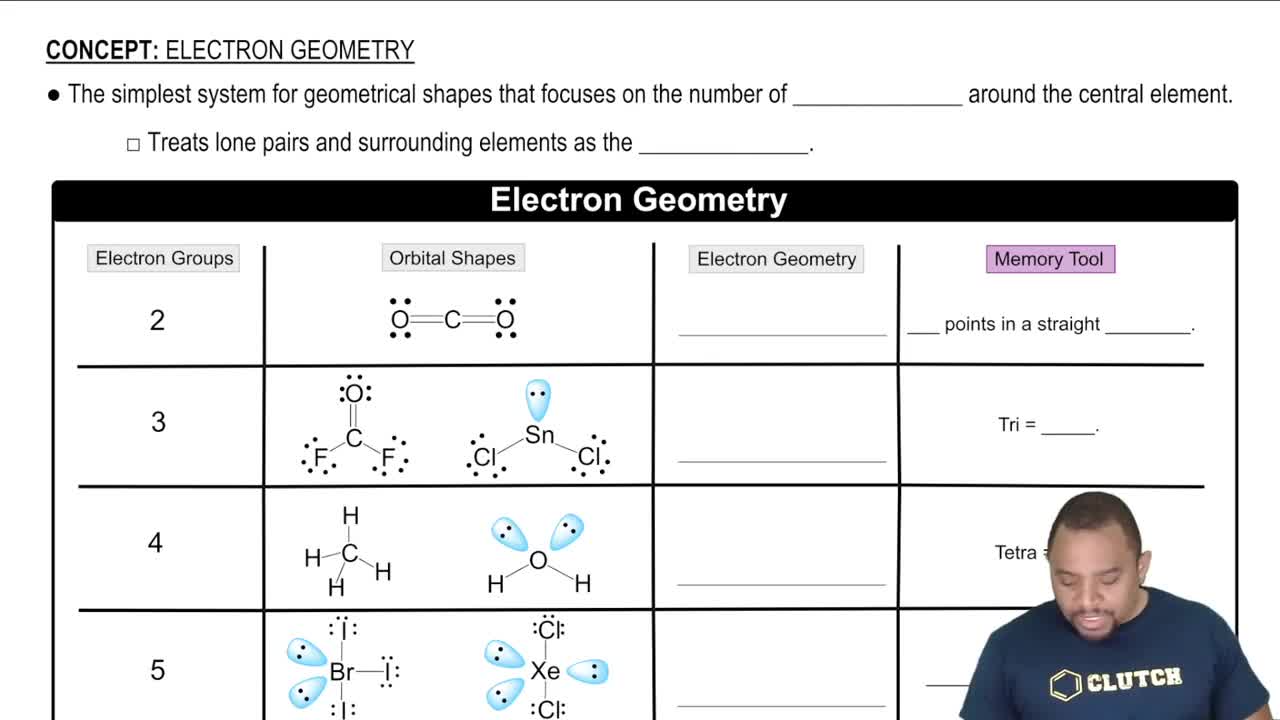
Electron Geometry

Current Flow and Electrode Behavior

The behavior of electrodes in an electrolytic cell is influenced by the flow of current. When the negative terminal of a voltage source is connected to an electrode, that electrode becomes the cathode, where reduction occurs. This is because electrons flow from the negative terminal to the cathode, allowing cations in the electrolyte to gain electrons and be reduced.
Video consigliato:
Percorso guidato
04:44
Electron Geometry