Ch.10 - Gases: Their Properties & Behavior
McMurry - Chemistry 8th Edition
McMurry8th EditionChemistryISBN: 9781292336145Non è quello che usi tu?Cambia libro di testo
Capitolo 10, Problema 39a

Carry out the following conversions: (a) 352 torr to kPa

Guida verificata passo dopo passo
1
Identify the conversion factor between torr and kPa. 1 atm = 760 torr and 1 atm = 101.325 kPa.
Set up the conversion equation using the conversion factor: \( \text{kPa} = \text{torr} \times \frac{101.325 \text{ kPa}}{760 \text{ torr}} \).
Substitute the given value (352 torr) into the equation: \( \text{kPa} = 352 \text{ torr} \times \frac{101.325 \text{ kPa}}{760 \text{ torr}} \).
Perform the multiplication and division to convert the pressure from torr to kPa.
Ensure the units cancel appropriately, leaving the final answer in kPa.

Risposta video verificata per un problema simile:

Questa soluzione video è stata consigliata dai nostri tutor come utile per risolvere questo problema.
Durata del video:
2m

Concetti chiave

Ecco i concetti essenziali che devi comprendere per rispondere correttamente alla domanda.

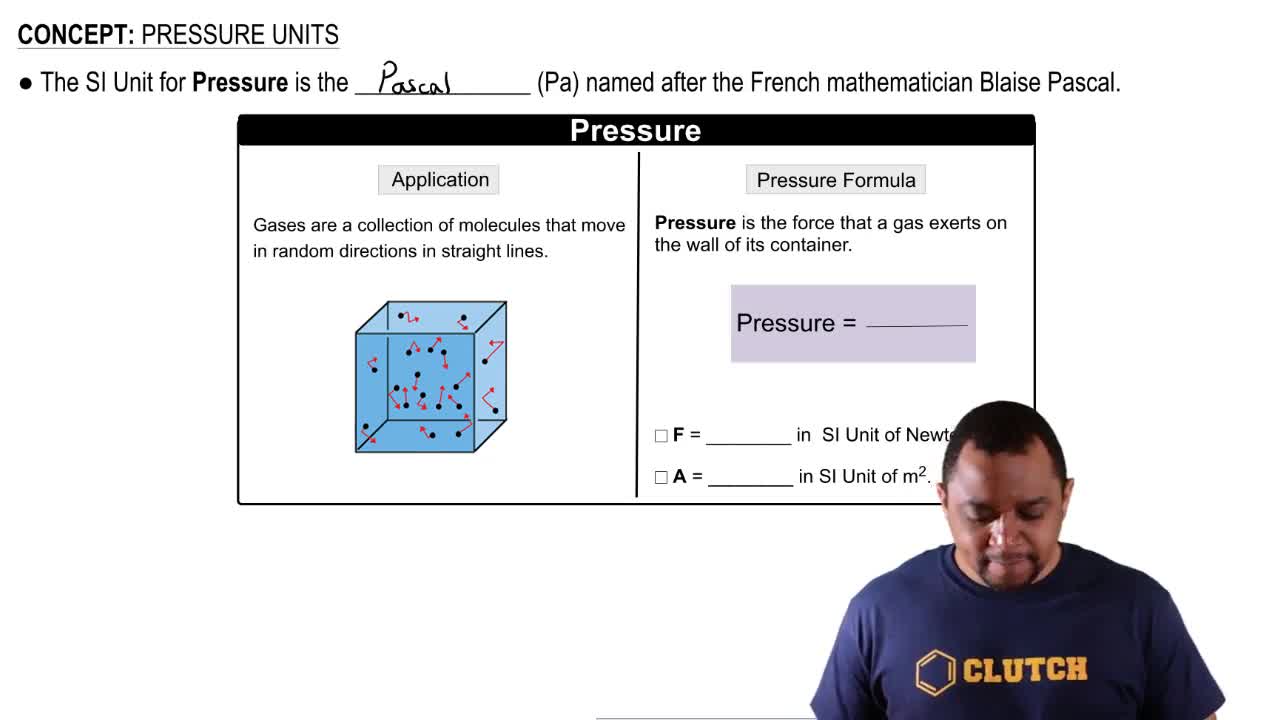
Pressure Units

Pressure is a measure of the force exerted per unit area. Common units for pressure include torr, pascal (Pa), and kilopascal (kPa). Understanding these units is essential for converting between them, as they represent the same physical quantity but are expressed differently.
Video consigliato:

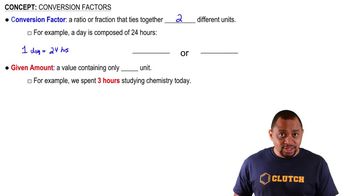
Conversion Factors

Conversion factors are ratios that express how many of one unit are equivalent to another unit. For pressure conversions, knowing that 1 torr is approximately equal to 0.133322 kPa allows for straightforward calculations. Using accurate conversion factors is crucial for obtaining correct results in unit conversions.
Video consigliato:
Percorso guidato
01:56
Conversion Factors

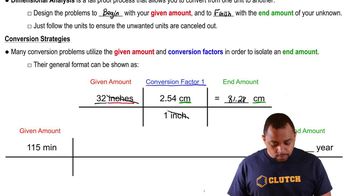
Dimensional Analysis

Dimensional analysis is a mathematical technique used to convert one set of units to another. It involves multiplying the quantity by conversion factors that cancel out the original units, leaving the desired units. This method ensures that the calculations are systematic and helps prevent errors in unit conversions.
Video consigliato:
Percorso guidato
06:11
Dimensional Analysis