Ch.14 - Chemical Kinetics
McMurry - Chemistry 8th Edition
McMurry8th EditionChemistryISBN: 9781292336145Non è quello che usi tu?Cambia libro di testo
Capitolo 14, Problema 54b

From the plot of concentration–time data in Figure 14.1, estimate: (b) the initial rate of decomposition of N2O5.

Guida verificata passo dopo passo
1
Identify the initial concentration of N2O5 from the plot at time t = 0.
Find the concentration of N2O5 at a small time interval after t = 0 from the plot.
Calculate the change in concentration, Δ[N2O5], by subtracting the initial concentration from the concentration at the chosen small time interval.
Determine the change in time, Δt, which is the time interval chosen in step 2.
Calculate the initial rate of decomposition of N2O5 using the formula: Rate = -Δ[N2O5]/Δt. The negative sign indicates the concentration of N2O5 is decreasing.

Risposta video verificata per un problema simile:

Questa soluzione video è stata consigliata dai nostri tutor come utile per risolvere questo problema.
Durata del video:
6m

Concetti chiave

Ecco i concetti essenziali che devi comprendere per rispondere correttamente alla domanda.

Rate of Reaction

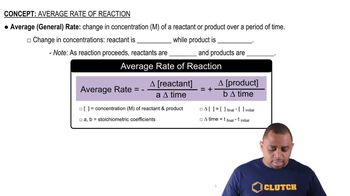
The rate of reaction refers to the speed at which reactants are converted into products in a chemical reaction. It is typically expressed as the change in concentration of a reactant or product per unit time. Understanding how to calculate and interpret reaction rates is essential for analyzing concentration-time data.
Video consigliato:
Percorso guidato
02:03
Average Rate of Reaction

Concentration-Time Graphs

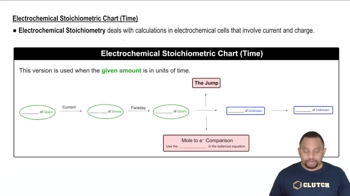
Concentration-time graphs visually represent how the concentration of a reactant or product changes over time. The slope of the curve at any point indicates the rate of reaction at that moment. For estimating initial rates, one typically examines the slope of the curve at the very beginning of the reaction, where the concentration changes most rapidly.
Video consigliato:
Percorso guidato
02:16
Electrochemical Stoichiometric Chart (Time)

Decomposition Reactions

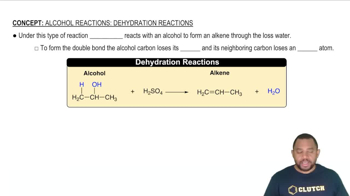
Decomposition reactions involve the breakdown of a compound into simpler substances, often resulting in the release of gases. In the case of N2O5, its decomposition can be represented by a specific reaction equation. Understanding the nature of decomposition reactions helps in predicting the behavior of reactants and products over time.
Video consigliato:
Percorso guidato
01:30
Alcohol Reactions: Dehydration Reactions