Ch.6 - Ionic Compounds: Periodic Trends and Bonding Theory
McMurry - Chemistry 8th Edition
McMurry8th EditionChemistryISBN: 9781292336145Non è quello che usi tu?Cambia libro di testo
Capitolo 6, Problema 76b

Each of the following pairs of elements will react to form a binary ionic compound. Write the formula of each compound formed, and give its name. (b) Calcium and oxygen

Guida verificata passo dopo passo
1
Identify the charges of the ions formed by each element. Calcium (Ca) typically forms a +2 cation (Ca^2+), and oxygen (O) typically forms a -2 anion (O^2-).
Write the formula by balancing the charges of the ions. Since both ions have charges of magnitude 2, they will combine in a 1:1 ratio to neutralize each other's charge.
Write the chemical formula using the appropriate subscripts for each ion to indicate the ratio in which they combine. In this case, it is CaO, as each ion has a subscript of 1.
Name the compound by first stating the name of the metal (calcium) and then the base name of the non-metal with the suffix '-ide'.
The name of the compound formed by calcium and oxygen is calcium oxide.

Risposta video verificata per un problema simile:

Questa soluzione video è stata consigliata dai nostri tutor come utile per risolvere questo problema.
Durata del video:
42s

Concetti chiave

Ecco i concetti essenziali che devi comprendere per rispondere correttamente alla domanda.

Ionic Compounds

Ionic compounds are formed when atoms transfer electrons, resulting in the formation of positively charged cations and negatively charged anions. These oppositely charged ions attract each other, creating a stable compound. The formula of an ionic compound reflects the ratio of the ions involved, ensuring that the overall charge is neutral.
Video consigliato:
Percorso guidato
02:11
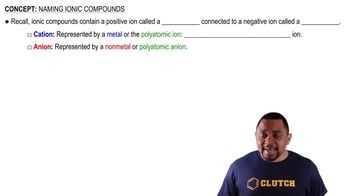
Ionic Compounds Naming

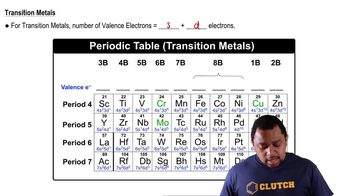
Valence Electrons

Valence electrons are the outermost electrons of an atom and are crucial in determining how an element will react chemically. In the case of calcium and oxygen, calcium has two valence electrons that it can lose to form a cation (Ca²⁺), while oxygen has six valence electrons and tends to gain two electrons to form an anion (O²⁻).
Video consigliato:
Percorso guidato
02:12
Transition Metals Valence Electrons

Naming Ionic Compounds

The naming of ionic compounds follows specific conventions. The cation is named first, followed by the anion. For example, in the compound formed from calcium and oxygen, the cation is calcium (Ca²⁺) and the anion is oxide (O²⁻), resulting in the compound name calcium oxide. The formula is derived from the charges of the ions, leading to CaO.
Video consigliato:
Percorso guidato
02:11
Ionic Compounds Naming